
Quick Answer
The fastest way to combat cat hair is to attack it at three points: the cat (regular brushing), the air (HEPA filtration), and the surfaces (a daily quick-clean plus a weekly deep-clean). No single tool wins alone, a rubber-bristled brush, a HEPA vacuum, and a lint roller working together will cut visible cat hair in your home dramatically more than any one product used by itself.
Key Takeaways
- Brushing two to five times a week (daily during shedding season) is the single biggest lever for reducing loose hair indoors.
- A daily 5-minute quick clean plus a weekly deep clean keeps hair from piling up in corners and on fabric.
- HEPA vacuums and air purifiers trap airborne dander that plain sweeping leaves behind.
- Sudden, excessive shedding can signal stress, poor diet, or an underlying health issue, not just "normal cat stuff."
- Low-shedding cat breeds exist, but no cat is truly hair-free.
- Rubber-sided pet hair tools generally outperform basic lint rollers on upholstery and carpet.
- Washable slipcovers, leather, and tightly woven fabrics make furniture far easier to keep hair-free than velvet or wool blends.
Why Do Cats Shed So Much Hair?
Cats shed because hair follicles cycle through growth and rest phases, and old hairs release constantly to make room for new ones. This is a normal biological process, not a flaw in your cat's coat, and it happens year-round with noticeable spikes in spring and fall as daylight hours shift.
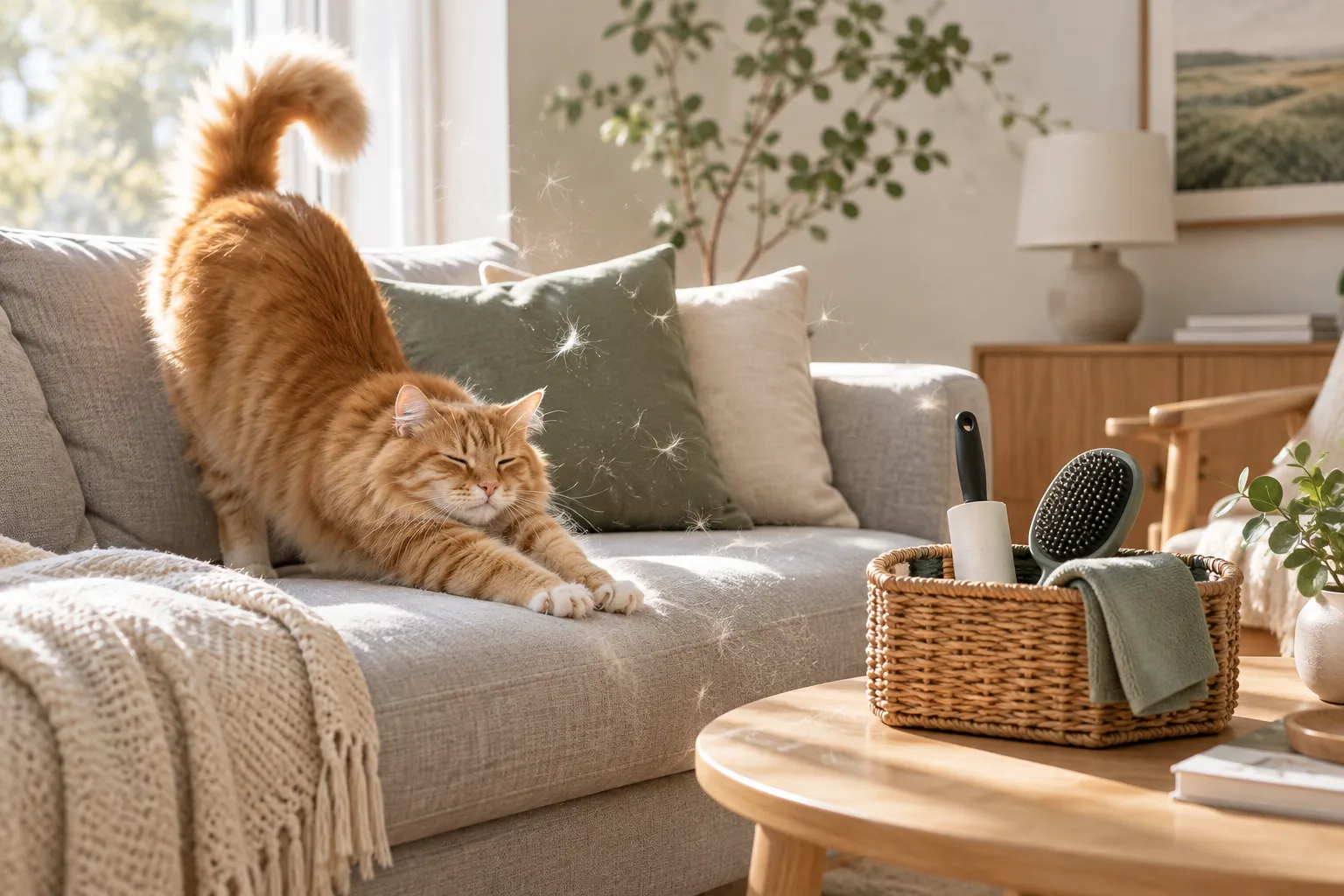
Indoor cats living under artificial light sometimes shed at a fairly steady rate all year, since their bodies don't get the strong seasonal light cues that trigger a sharp seasonal "blowout" the way outdoor cats experience. Double-coated breeds (think Maine Coons or Siberians) carry a dense undercoat that sheds in larger clumps, while shorthaired cats shed just as much hair by weight but in finer, less noticeable strands that spread more easily through the air and onto fabric.
Quick example: A Maine Coon owner might notice big tufts collecting under furniture, while a Siamese owner sees fewer visible clumps but more hair dust on dark clothing. Both cats are shedding a similar amount, the coat type just changes how it shows up.
How to Combat Cat Hair With a Daily and Weekly Cleaning Routine
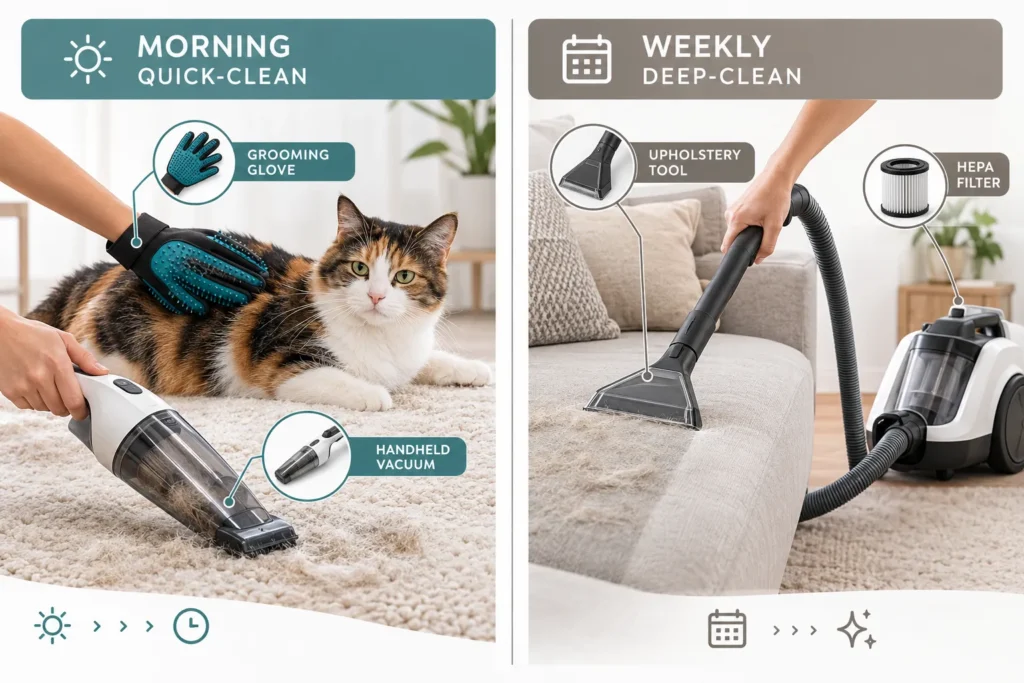
The most reliable answer to how to combat cat hair is structure: a short daily routine to catch loose fur before it settles, and a deeper weekly session to clear what got missed. Veterinary and pet welfare groups consistently point to consistency, not intensity, as the real difference-maker.
Daily (5-10 minutes):
- Run a rubber grooming glove or brush over your cat for a few minutes.
- Quick-vacuum or dust the areas your cat naps in most, sofa cushions, cat beds, windowsills.
- Wipe down hard floors near litter boxes and food stations with a microfiber mop.
Weekly (20-30 minutes):
- Full vacuum pass with a HEPA-filter machine, including upholstery attachments.
- Wash cat bedding and any washable throws or slipcovers.
- Wipe baseboards and vents, where airborne hair tends to collect.
- Clean the vacuum's brush roll and filter, a clogged filter stops trapping dander.
Common mistake: Cleaning heavily once a week and skipping daily maintenance. Hair that sits for days works itself deeper into carpet fibers and fabric weave, making the weekly deep-clean take twice as long.
How Often Should You Brush Your Cat to Reduce Shedding?
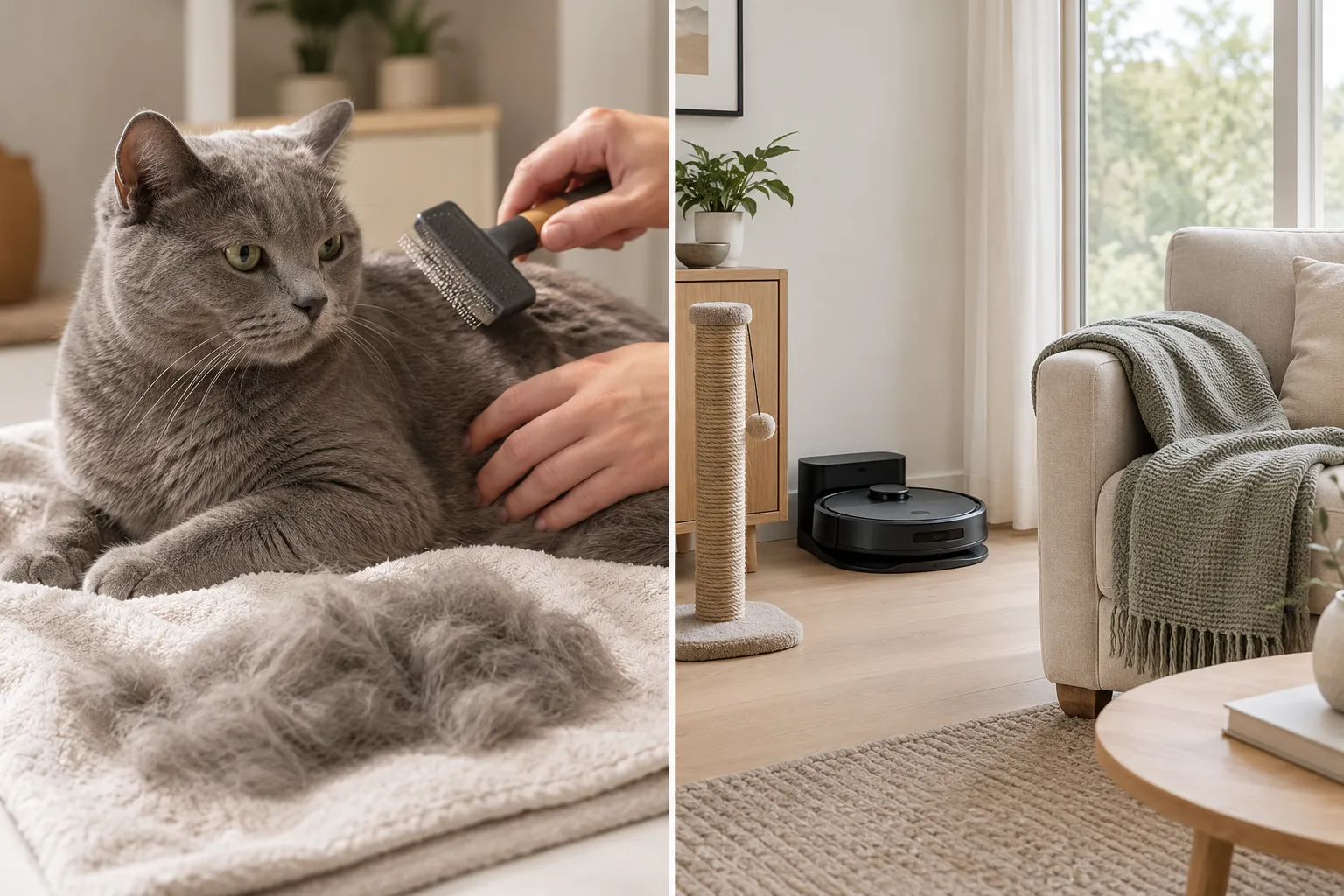
Brush shorthaired cats two to three times a week and longhaired cats daily to noticeably cut down loose hair around the house. During spring and fall shedding peaks, bump that up, daily brushing for every coat type helps catch hair before it hits the floor.
Choose your tool based on coat type:
| Coat type | Best brush | Frequency |
|---|---|---|
| Shorthair | Rubber curry brush or grooming glove | 2-3x/week |
| Longhair | Slicker brush + wide-tooth comb | Daily |
| Double-coated | Undercoat rake | 3-4x/week, daily in shedding season |
Does bathing a cat reduce shedding? Occasional bathing, done correctly, can loosen and remove dead undercoat hair, which is why some longhaired cat owners bathe every 4-6 weeks during heavy shedding periods. But bathing is not a substitute for brushing, and over-bathing dries out skin, which can actually trigger more shedding as a stress response. If your cat tolerates it, a bath followed by thorough brushing while the coat dries removes far more loose hair than either step alone.
Can You Stop a Cat From Shedding?
No, shedding is a natural, ongoing process, and you cannot stop it entirely. What you can do is manage the volume and where it ends up, mainly through diet, grooming, and a stress-free environment.
A few factors that make shedding worse than it needs to be:
- Poor-quality diet: Skin and coat health depend on adequate protein and fatty acids. A nutrient-thin diet often shows up first as a dull, over-shedding coat.
- Dehydration: Cats that drink too little water can develop drier skin, which sheds more.
- Stress: Moves, new pets, or schedule changes can trigger stress shedding, similar to how humans lose more hair during stressful periods.
Is excessive cat shedding a sign of illness? Sometimes, yes. Sudden bald patches, brittle or thinning fur, or shedding paired with scratching, weight loss, or lethargy warrants a vet visit. Thyroid issues, allergies, parasites, and poor nutrition can all show up as abnormal shedding. Choose to call your vet if the shedding pattern changes quickly rather than gradually, that's the clearest signal something beyond normal coat cycling is going on.
What Cat Breeds Shed the Least?
No cat breed sheds zero hair, but several breeds are known for coats that produce noticeably less loose hair around the home. Sphynx cats (essentially hairless) top the list, followed by breeds like the Cornish Rex, Devon Rex, and Siamese, which carry thin, close-lying coats.
If you're choosing a cat with shedding in mind:
- Choose a Sphynx or Rex breed if minimal loose hair matters more than a fluffy coat.
- Choose a Siamese or Bengal if you want short hair with normal texture and less shedding than a double-coated breed.
- Avoid or plan ahead with Maine Coons, Persians, or Siberians, gorgeous coats, but genuinely high-maintenance for hair control.
Best Vacuum for Cat Hair (and Air Purifiers for Dander)
The best vacuum for cat hair is a HEPA-filter model with a motorized brush roll designed for pet hair, since standard vacuums often clog or simply push fine cat hair around instead of lifting it. Robot vacuums with pet-hair settings now work well as a daily supplement between full vacuum sessions, especially for hard floors and low-pile rugs.
What to look for:
- HEPA filtration, traps fine dander, not just visible hair.
- Tangle-free or self-cleaning brush roll, regular vacuums choke on long cat hair fast.
- Upholstery attachment, for sofas, cat trees, and car seats.
- A robot vacuum with a pet-hair mode, good for daily floor maintenance, not a replacement for a deep-clean pass.
Air purifiers for cat hair and dander: A HEPA air purifier sized correctly for the room removes airborne dander and fine hair particles that settle on shelves and dark furniture hours after cleaning. This matters most in bedrooms and living rooms where cats spend the most time. Run it continuously in shedding season rather than only when you notice visible hair, most airborne dander is invisible until it lands.
Lint Roller vs Pet Hair Removal Tool: Which Is Better?
Rubber-sided pet hair removal tools generally outperform basic lint rollers on carpet and upholstery, while classic sticky lint rollers still win for quick touch-ups on clothing right before you leave the house. The right choice depends on the surface and how much time you have.
| Tool | Best for | Limitation |
|---|---|---|
| Sticky lint roller | Clothing, quick touch-ups | Runs out fast, not reusable |
| Rubber-bristled tool | Carpet, upholstery, car seats | Needs manual effort, no adhesive mess |
| Reusable fabric roller | Delicate fabrics, curtains | Slower on large areas |
| Damp rubber glove | Couch cushions, throws | Requires rinsing between passes |
Decision rule: Choose a rubber-sided tool for anything larger than a shirt, the static-and-friction action pulls hair out of woven fibers better than adhesive alone. Save the lint roller for last-minute outfit checks.
Does Cat Hair Cause Allergies?
Cat hair itself is not the main allergen, a protein found in cat saliva, skin (dander), and urine is the real trigger, and that protein clings to loose hair as cats groom themselves. So while "cat hair allergies" is the common phrase, reducing loose hair and dander together is what actually eases allergy symptoms.
Practical steps that help allergy sufferers:
- Run a HEPA air purifier in bedrooms and main living spaces.
- Wash hands after handling your cat, especially before touching your face.
- Vacuum with a HEPA filter weekly, minimum.
- Keep your cat off beds and pillows if allergies are moderate to severe.
Edge case: Some people react more to one cat than another, since dander protein levels vary between individual cats, not just between breeds.
Surface-by-Surface: How to Combat Cat Hair Everywhere in Your Home
Different surfaces trap cat hair differently, so the fastest cleanup uses a slightly different technique for fabric, hard floors, car interiors, and furniture.
How to get cat hair off clothes: Toss clothes in the dryer on a no-heat, air-only cycle for 10 minutes before washing, the tumbling loosens hair, and the dryer's lint trap catches it before it clogs your washing machine. A rubber-bristled brush or damp hand run over fabric also works in a pinch.
Cat hair on hardwood floors, easiest way to clean: A slightly damp microfiber mop or dust mop outperforms dry sweeping, since dry brooms create static that scatters hair rather than collecting it. Follow with a vacuum pass along baseboards, where hair tends to drift and pile up.
How to clean cat hair out of your car interior: A rubber squeegee or window scraper pulled across seat fabric bunches hair into removable clumps fast, especially on cloth seats where a vacuum alone struggles. Finish with a handheld vacuum for crevices and floor mats.
Best furniture for cat owners to hide hair: Choose tightly woven fabrics, leather, faux leather, or microfiber over velvet, chenille, or wool blends, since loose weaves trap hair deep in the fibers. Washable slipcovers and darker, patterned upholstery both hide and simplify cleanup far better than solid light colors. A dedicated cat blanket on favorite napping spots also keeps hair concentrated on one washable item instead of the whole couch.
For households juggling shedding across species, say a cat and a heavy-coated dog, the same layered approach applies. If you're also managing a big shedder like a Cane Corso, the Cane Corso shedding control guide covers overlapping strategies worth borrowing.
Frequently Asked Questions
How often should I deep-clean my home for cat hair?
Once a week is the practical minimum for most households; homes with multiple cats or allergy sufferers benefit from a mid-week vacuum pass too.
Can diet actually reduce shedding?
Yes. A diet with adequate protein and omega fatty acids supports healthier skin and coat, which cuts down on excess shedding over several weeks. Check current best cat food guidance if you're evaluating your cat's diet.
Is shaving my cat a good way to reduce hair in the house?
Generally, no. Shaving disrupts a cat's temperature regulation and skin protection, and it doesn't stop the shedding cycle, regular brushing is safer and just as effective.
Do supplements help with shedding?
Omega-3 fatty acid supplements, added under vet guidance, can support skin and coat health, which may reduce excessive shedding tied to dry skin.
Why does my cat shed more in spring?
Longer daylight hours trigger the coat to shed the thicker winter undercoat, a normal seasonal cycle most noticeable in double-coated breeds.
Will a robot vacuum handle cat hair on its own?
It helps with daily floor maintenance but won't replace a full HEPA vacuum pass on upholstery, curtains, and edges where hair accumulates.
Does stress really cause my cat to shed more?
Yes. Stress shedding is a documented feline response to changes like moving homes, new pets, or disrupted routines, watching your cat's mood and body language can help you catch stress early.
Conclusion
Combating cat hair isn't about one miracle product, it's about layering a few habits that reinforce each other: brushing on a schedule, running HEPA filtration, and cleaning surfaces with the right tool for the job. Start small this week. Pick one brushing day, one vacuum day, and stick to them for a month before adding more. Your floors, your furniture, and your lungs will notice the difference before your cat even finishes their next nap.
Build Your Cat Hair Combat Plan
Pick your cat's coat and household size to get a quick routine.