
Quick Answer
Keeping a fresh-smelling home with a cat comes down to five habits: scoop litter daily, choose an odor-control litter, wash textiles weekly, add ventilation and filtration, and clean accidents with enzyme cleaners instead of masking sprays. None of these take more than a few minutes a day, but skipping them lets odor compounds build up fast. Cat smell isn't really a mystery smell at all, it's an indoor air quality issue with a specific, fixable cause.
Key Takeaways
- Litter boxes should be scooped daily and fully changed weekly to control odor at the source.
- Clumping, low-dust, odor-control litter formulas outperform basic clay litter for smell control.
- Baking soda works as a mild odor absorber but isn't a substitute for enzyme cleaners on accidents.
- Essential oil diffusers carry real risk for cats and should generally be avoided.
- HEPA-style air purifiers placed near litter areas cut down airborne dander and odor particles.
- Cross-ventilation and exhaust fans matter more in multi-cat homes than any spray or candle.
- Enzyme cleaners break down odor-causing proteins in urine; regular cleaners just mask the smell temporarily.
- Indoor cats need more deliberate odor management than outdoor cats, since indoor cats do all their business at home.
What Causes Cat Smell in Houses?
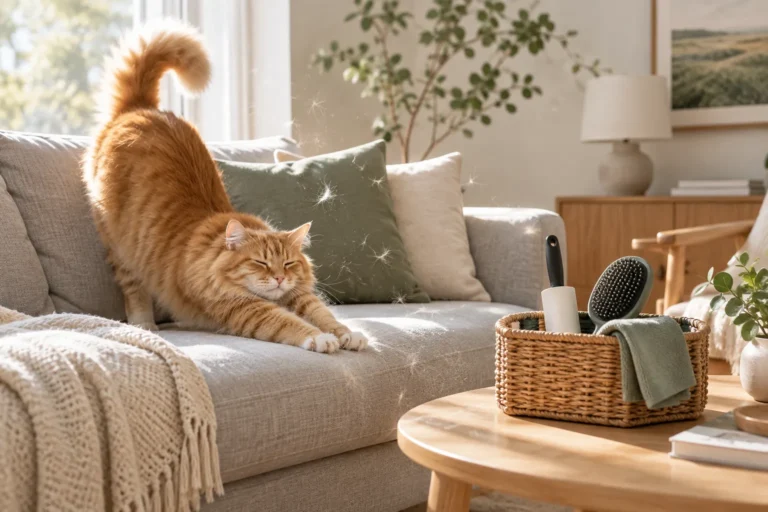
Cat smell mostly comes from four sources: litter box waste, urine and dander on textiles, oil from a cat's coat, and ammonia buildup from stagnant air. Understanding which one is dominant in a home helps target the fix instead of just covering the smell.
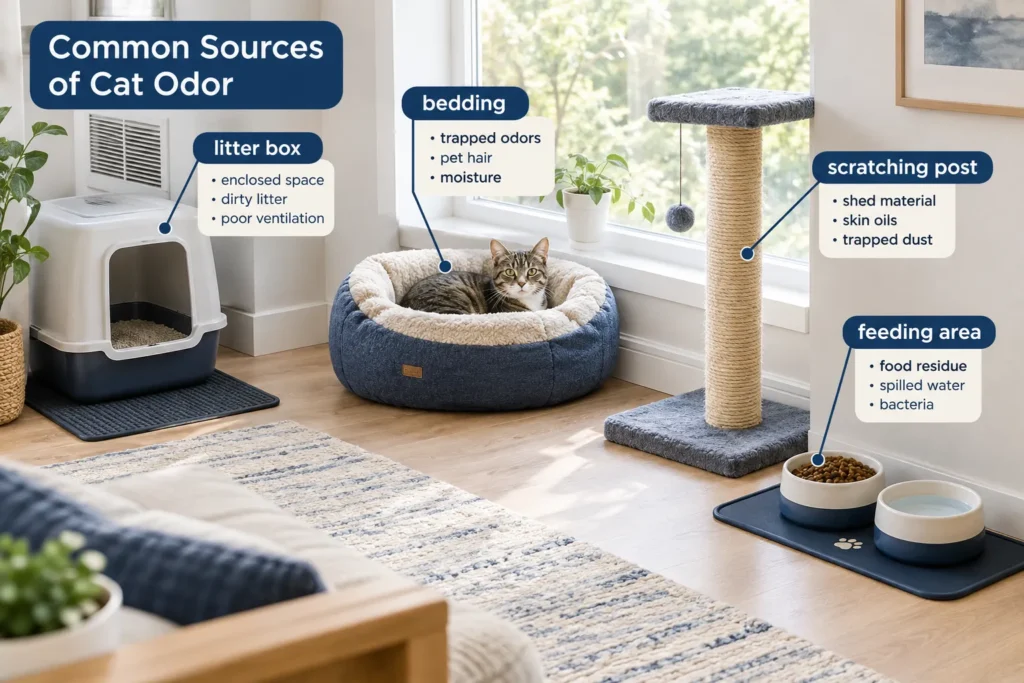
Ammonia from urine breaks down over time and releases volatile compounds, the same category of pollutant that building and indoor air quality experts track when they flag pets as a major source of indoor air contamination. Dander (tiny skin flakes) and coat oils settle into carpets, curtains, and upholstery, and they don't announce themselves the way a fresh litter box does. That's why a house can smell "fine" day to day but hit a visitor with a wall of cat smell the moment they walk in, noses adjust to slow buildup, but a stranger's nose doesn't.
Common mistake: Assuming a strong-smelling home just needs a better air freshener. Air fresheners mask the top layer of smell while the actual sources, litter, fabric, stagnant air, keep producing it underneath.
Quick Checklist: Ways to Keep Your House Fresh Even With a Cat
This checklist covers the core, repeatable habits that make the biggest difference. Choose the ones that fit the household size and cat count, then build them into a weekly rhythm.
- Scoop litter every day, even one skipped day lets odor compounds build.
- Do a full litter change weekly, and scrub the box monthly with mild soap.
- Replace the litter box itself every 6-12 months, plastic absorbs odor permanently over time.
- Wash cat bedding and soft toys weekly in hot water.
- Run an air purifier near the litter zone or main cat hangout spot.
- Crack a window or run an exhaust fan in the litter box room daily.
- Vacuum carpets and upholstery twice a week to lift dander before it settles.
- Treat any accident immediately with an enzyme cleaner, not a scented spray.
How Often Should You Clean the Litter Box to Reduce Odor?
Scoop the litter box at least once a day, do a full litter swap weekly, and give the box a deep scrub monthly. Daily scooping is, by far, the single biggest lever for odor control, more important than the litter brand or the box itself.
Here's why the schedule matters so much: cat urine starts producing ammonia smell within hours, and solid waste left sitting compounds the problem fast. A weekly full change resets the box before litter gets saturated and starts holding smell even after scooping. The monthly scrub matters too, because plastic litter boxes absorb odor into microscopic surface scratches over time, no amount of scooping fixes that.
Decision rule: In a multi-cat household, add one extra box per cat, plus one. Two cats sharing a single box means twice the odor load hitting the same spot, and shared boxes also cause litter box avoidance in some cats, a topic covered in more detail in how to read your cat's mood, since stress and litter avoidance often show up together. Diet plays a role too; a lower-quality food can mean smellier waste, which is one reason nutrition guides like the best dry food for kittens matter beyond just growth.
Best Litter Types for Odor Control
Clumping, low-dust litters with activated carbon or baking soda additives control odor best for most households. Crystal (silica) litter is a strong second choice for owners managing dust-related allergies, while pine and corn-based litters work well as a lower-scent, biodegradable middle ground.
| Litter Type | Odor Control | Best For |
|---|---|---|
| Clumping clay | Strong | Most homes |
| Crystal/silica | Very strong | Dust-sensitive owners |
| Pine/wood pellets | Moderate | Eco-conscious homes |
| Corn/wheat | Moderate | Sensitive-stomach cats |
Edge case: Some cats reject scented litter entirely and start avoiding the box, which makes the odor problem worse, not better. If a cat suddenly stops using the box after a litter switch, go back to an unscented clumping formula.
Natural Ways to Freshen Up Your House With Cats
Natural odor control works best as a layer on top of good cleaning habits, not a replacement for them. Baking soda, sunlight, fresh air, and regular laundering handle the everyday freshness job without chemical fragrance.
Simple, low-cost habits that genuinely help:
- Sprinkle baking soda in the litter box before adding fresh litter.
- Open windows for 15-20 minutes daily, even in cold weather.
- Wash cat bedding and blankets on a hot cycle weekly, this pairs well with knowing a cat's sleeping habits, since favorite nap spots absorb the most oil and dander.
- Vacuum with a pet-hair attachment, then follow with a slightly damp microfiber cloth on hard floors.
Does Baking Soda Work for Cat Odor?
Yes, baking soda works as a mild, safe odor absorber, but it doesn't kill bacteria or break down urine proteins. It's best used inside the litter box or sprinkled on carpets before vacuuming, not as a stand-in for enzyme cleaner on an actual accident.
Are Air Fresheners and Essential Oils Safe for Cats?
Most plug-in air fresheners and scented sprays are not ideal for cats, and several essential oils are outright toxic to them. Cats lack the liver enzymes needed to safely process many essential oil compounds, so diffusing oils like tea tree, citrus, or eucalyptus in a home with a cat carries real risk.
Safer alternatives include unscented HEPA filtration, baking soda, and good ventilation. If a scent is wanted, choose pet-safe, cat-specific odor eliminators labeled as such, and always keep diffusers in rooms the cat can't access. Common mistake: assuming "natural" automatically means "safe", natural essential oils are still concentrated chemical compounds, and concentration is exactly what makes them dangerous for a small animal with a cat's liver chemistry.
Best Air Purifiers for Cat Owners
A true HEPA air purifier placed near the litter box or main cat area is the single most effective device for controlling airborne cat odor and dander. Look for a unit rated for the room's square footage, with a pre-filter for hair and an activated carbon layer for odor gases.
What to prioritize when choosing one:
- True HEPA filtration (captures dander and fine particles, not just a "HEPA-type" claim).
- Activated carbon layer for gas and odor absorption, not just particles.
- Filter replacement cost, cheap units can cost more long-term in filters.
- Noise level, especially for bedrooms.
Choose a purifier with carbon filtration if the main complaint is smell rather than visible dust or allergies, carbon handles odor molecules that HEPA alone can't touch.
Ventilation Tips for Homes With Multiple Cats
Multi-cat homes need active airflow, not just filtration, because odor load scales directly with cat count. A single purifier can't outpace three or four litter boxes in a closed room.
Practical ventilation moves that make a real difference:
- Run a bathroom-style exhaust fan in the litter room if one exists.
- Keep litter boxes away from bedrooms and main living areas, humid, low-airflow rooms trap smell.
- Crack windows on opposite sides of the home for 10-15 minutes to create cross-breeze.
- Space boxes across different rooms rather than clustering them in one closet.
Quick example: A three-cat household with all boxes in one small laundry room will smell far worse than the same three cats with boxes spread across a mudroom, a bathroom, and a basement corner, same litter, same scooping schedule, very different result.
How to Remove Cat Urine Smell From Furniture and Cat Hair Odor
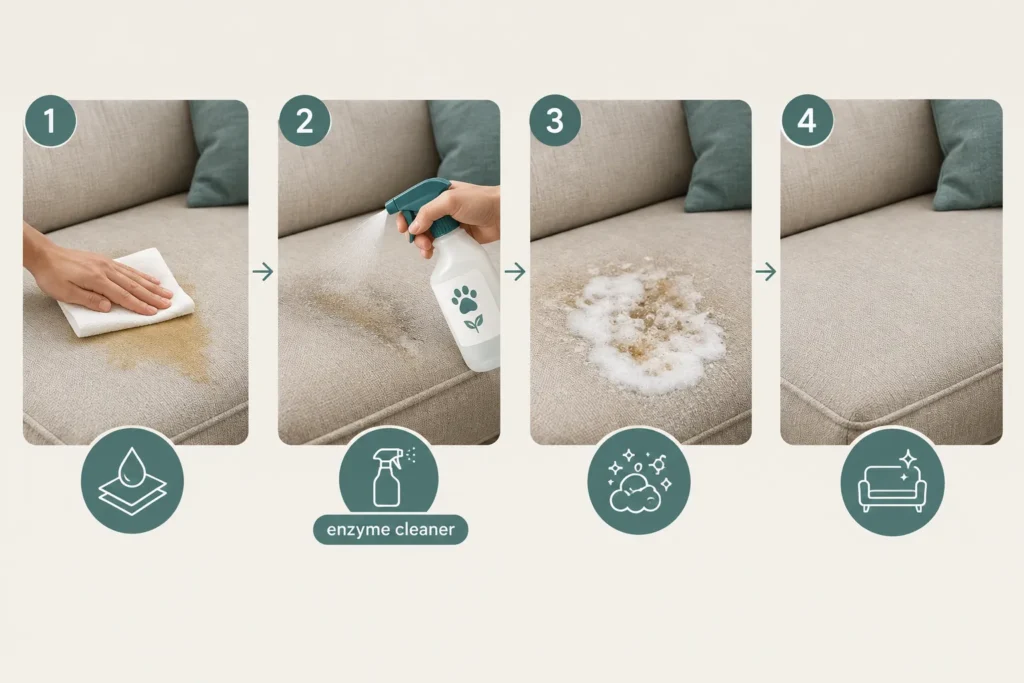
Enzyme cleaners remove cat urine smell from furniture because they break down the uric acid crystals that regular cleaners can't touch. Blot the stain first, soak the area with enzyme cleaner, let it sit as long as the label recommends, then blot dry, skipping the soak time is the most common reason odor comes back.
Enzyme Cleaners vs Regular Cleaners for Cat Accidents
Enzyme cleaners digest the odor source biologically; regular cleaners and soaps only mask or partially dilute it. Once uric acid crystals dry, regular cleaning products can't reach them, enzymes are the only category that actually breaks the bond down.
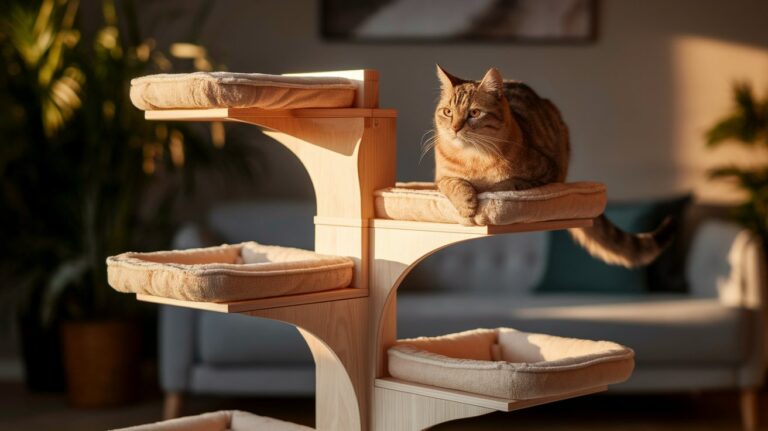
For cat hair smell specifically, the oil on individual hairs is the real culprit, not the hair itself. Vacuuming with a pet-hair brush attachment, washing removable covers weekly, and giving cats a dedicated scratching or lounging spot, like the setups covered in this guide to cardboard cat scratcher houses, helps concentrate hair and oil in one washable zone instead of spreading it across every surface in the house.
Best Plants That Are Safe for Cats and Freshen Air
Spider plants, Boston ferns, and areca palms are safe for cats and help freshen indoor air without adding toxicity risk. Avoid lilies, pothos, and philodendron entirely, these are genuinely dangerous if a curious cat takes a bite.
Safe, air-friendly picks for a cat household:
- Spider plant, tough, low-maintenance, non-toxic.
- Boston fern, adds humidity balance, safe if nibbled.
- Areca palm, larger air-freshening presence, cat-safe.
Edge case: "Cat-safe" doesn't mean "cat-proof." Even a non-toxic plant can get knocked over or shredded, so place plants somewhere a cat can investigate without a full takedown.
Keeping Your House Fresh Even With Indoor vs Outdoor Cats
Indoor cats need more deliberate odor management because every bit of waste, shedding, and marking happens inside the home. Outdoor or indoor-outdoor cats spread some of that load outside, but they bring in dirt, pollen, and occasionally stronger territorial marking odors when they come back in.
For indoor-only cats, doubling down on litter box maintenance, ventilation, and weekly textile washing matters most. For outdoor-access cats, a wipe-down mat by the door and a quick coat check for debris helps more than any indoor spray. Litter box avoidance and sudden odor changes can also signal stress, which ties back to reading a cat's body language, a skill worth building through how to read your cat's mood, since an anxious cat is more likely to mark or avoid the box altogether.
FAQ
Does a cat's diet affect how much the house smells?
Yes. Lower-quality food with more filler ingredients tends to produce smellier waste, which increases litter box odor even with a good cleaning schedule.
Can I use scented candles instead of air fresheners around cats?
It's safer than diffusing essential oils, but candles still release particles into the air. Unscented or naturally scented soy candles, used briefly with ventilation, are the lower-risk option.
How long does cat urine smell last on fabric?
Untreated, it can linger for months because dried uric acid crystals keep releasing odor when humidity rises. Enzyme cleaner applied promptly usually resolves it within one or two treatments.
Is one litter box enough for two cats?
Generally no. The standard guidance is one box per cat plus one extra, since shared boxes increase both odor concentration and the chance of litter box avoidance.
Do air purifiers really make a noticeable difference with cats?
Yes, especially models with true HEPA and activated carbon filters placed near the litter area, they capture dander and odor gases that ventilation alone can miss.
Are essential oil diffusers ever safe with a cat in the house?
Some heavily diluted, cat-safe formulations exist, but many common oils are toxic to cats. The safest approach is avoiding diffused essential oils altogether unless a vet has confirmed a specific product is safe.
What's the fastest way to get rid of a sudden strong cat smell?
Scoop and fully change the litter box, open windows for cross-ventilation, and run a HEPA purifier for an hour. This combination addresses the source and clears lingering particles fastest.
Conclusion
A fresh-smelling home with a cat isn't about finding the perfect spray. It's about stacking small, consistent habits: daily scooping, weekly litter changes, enzyme cleaner on accidents, decent ventilation, and a purifier doing quiet work in the background. Skip the essential oil diffusers, choose litter and plants that are genuinely cat-safe, and match the effort level to the number of cats and whether they're indoor or outdoor.
Start this week with one change, daily scooping if that's been slipping, or finally swapping that old litter box for a new one. Small, repeated habits beat any single product, and they're the real answer to keeping a house fresh even with a cat in it. For more guidance on understanding cat behavior and care, browse the full library at Best Pets Corner.