
Quick Answer
Entertaining a cat in a small apartment comes down to three things: structured daily play, smart use of vertical space, and rotating a small pool of toys instead of buying more. A cat doesn't need square footage to stay happy, it needs defined zones for climbing, hiding, scratching, and hunting-style play. Even a 400-square-foot studio can meet a cat's enrichment needs if you organize it well and stay consistent with playtime.
Key Takeaways
- Cats need vertical territory more than floor space, so shelves and cat trees matter more than a bigger apartment.
- Two short play sessions a day (morning and evening) beat one long, unstructured session.
- Rotating three to five toys weekly prevents boredom better than owning twenty toys left out all the time.
- Puzzle feeders and window perches deliver mental stimulation without taking up any real floor area.
- Overgrooming, ankle-pouncing, and shelf-knocking are common signs of an under-stimulated apartment cat.
- Renters can add vertical enrichment without drilling, using tension-mounted trees and door-hung perches.
- A consistent hunt-catch-eat-sleep play cycle matters more than expensive gear.
What Does It Mean to Entertain a Cat in a Small Apartment?
Entertaining a cat in a small apartment means giving it enough physical activity, mental challenge, and sensory variety within limited square footage, not necessarily more stuff crammed into a tiny room. It's about matching the space you have to the way cats naturally behave.
Cats are built around a predatory play cycle: stalk, chase, pounce, "kill," eat, groom, sleep. This cycle is well documented in feline behavior work, including the environmental needs guidelines published by feline veterinary groups. A cat confined to a small apartment without an outlet for that cycle tends to redirect the energy somewhere else, usually your ankles at 6 a.m.
Decision rule: if your cat is indoor-only and living in under 600 square feet, prioritize enrichment quality (defined zones, structured play) over enrichment quantity (more toys, more gadgets). Quality wins every time in a tight footprint.
How Much Space Does a Cat Really Need to Stay Entertained?
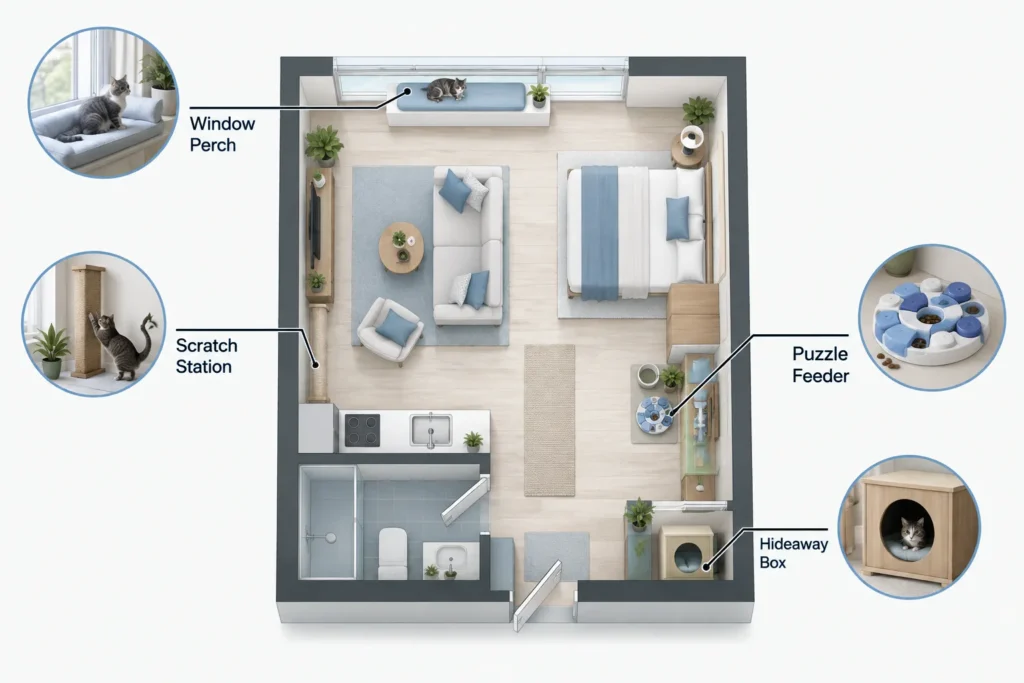
Cats don't need much floor space at all, they need clearly defined zones. A cat in a small studio can be just as entertained as one in a house, as long as the apartment is divided into a few functional areas rather than one undifferentiated room.
Aim for these four zones, even in a single room:
- A lookout perch: a window ledge, cat shelf, or the top of a bookshelf.
- A scratch station: away from the sleeping area, ideally near a doorway or high-traffic path. A modern cardboard cat scratcher house works well because it doubles as a hideout too.
- A hideaway: a covered bed, box, or under-furniture nook where the cat can fully disengage.
- A feeding/puzzle zone: separate from the litter area, used for slow feeders or treat-dispensing toys.
Common mistake: owners assume a small apartment automatically means an under-stimulated cat. In reality, clutter and lack of zoning cause more boredom than square footage ever does. A 300-square-foot studio with four clear zones outperforms a 1,000-square-foot house where every toy sits in one pile in the corner.
How to Entertain a Cat in a Small Apartment With the Right Toys?
The right toys for entertaining a cat in a small apartment are ones matched to your cat's energy level and rotated regularly, not necessarily the most expensive or elaborate ones on the shelf. Cats habituate to toys, meaning a toy that never changes eventually becomes invisible to them.
Here's a quick comparison to help you choose without overspending:
| Toy Type | Best For | Approx Cost (estimate) | Space Needed |
|---|---|---|---|
| Wand/feather teaser | Interactive play sessions | Under $10 | None (stored away) |
| Puzzle feeder | Slow eaters, mental stimulation | $8-$20 | Small counter or floor spot |
| Catnip or solo mice | Independent play | Under $10 for a set | Minimal |
| Window bird feeder (outside glass) | Passive sensory enrichment | $15-$25 | Zero indoor footprint |
| Treat-dispensing ball | Food-motivated cats | $8-$15 | Rolls freely, needs open floor patch |
| Cardboard scratcher/box | Scratching plus hiding | $15-$30 | Small footprint, dual purpose |
Decision rule: choose a wand teaser as your daily driver if your cat is under three years old or naturally high-energy. Choose puzzle feeders and window perches as your primary tools if your cat is older, less mobile, or naturally more independent, traits common in some Siamese lines, including Lynx Point Siamese cats, which tend to want constant novelty rather than repetitive toys.
How to Entertain a Cat in a Small Apartment Using Vertical Space?
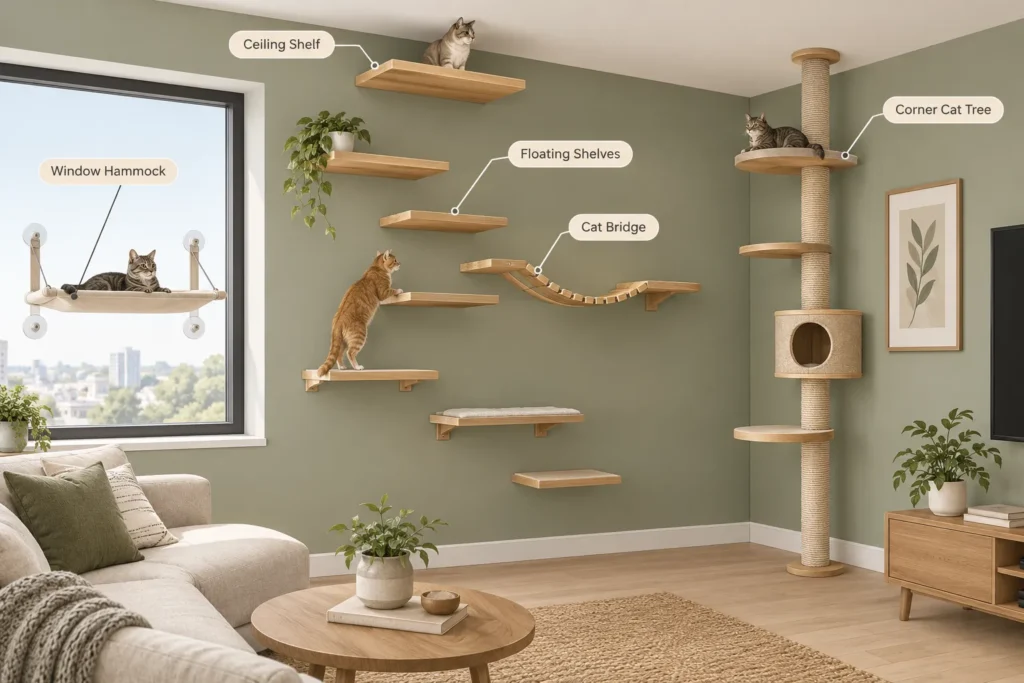
Vertical space is the single biggest lever for entertaining a cat in a small apartment, because it multiplies usable territory without taking up any floor area. Cats are natural climbers, and height gives them a sense of safety and control that flat, open rooms don't.
Practical vertical additions include:
- Floating wall shelves arranged in a staggered "climbing path" toward a high perch.
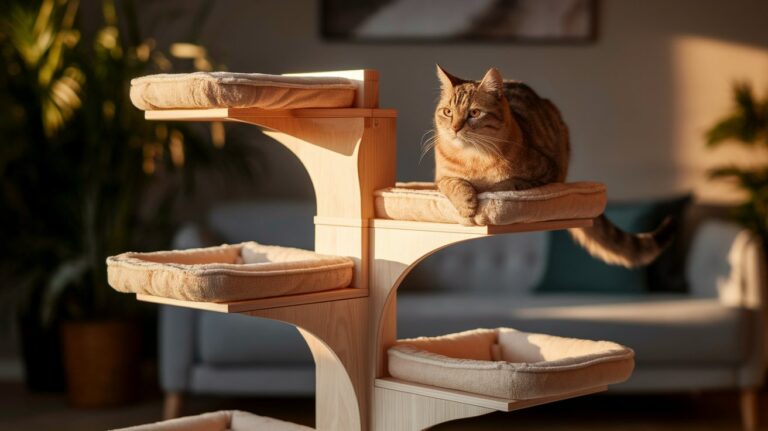
- A slim floor-to-ceiling cat tree tucked into a corner.
- A window hammock or suction-mounted perch.
- The top of a wardrobe, cleared and lined with a soft mat.
Edge case for renters: if you can't drill into walls, skip the wall-shelf route entirely. Use a tension-mounted cat tree (it wedges between floor and ceiling) or a door-hung perch instead. Both give you vertical enrichment without violating a lease.
Safety note: keep any perch away from blind cords, heaters, and open windows without secure screens. A curious, adventurous cat, the kind you'd read about in a piece on the world's most adventurous cat breeds, will test every ledge you give it.
What Daily Play Routine Keeps an Apartment Cat Happy?
Two short, structured play sessions a day, one in the morning and one before bed, do more for an apartment cat's happiness than one long, unfocused play session. This matches the natural hunt-catch-eat-sleep rhythm that behaviorists like Jackson Galaxy have popularized for indoor cats.
A simple 10 to 15 minute session looks like this:
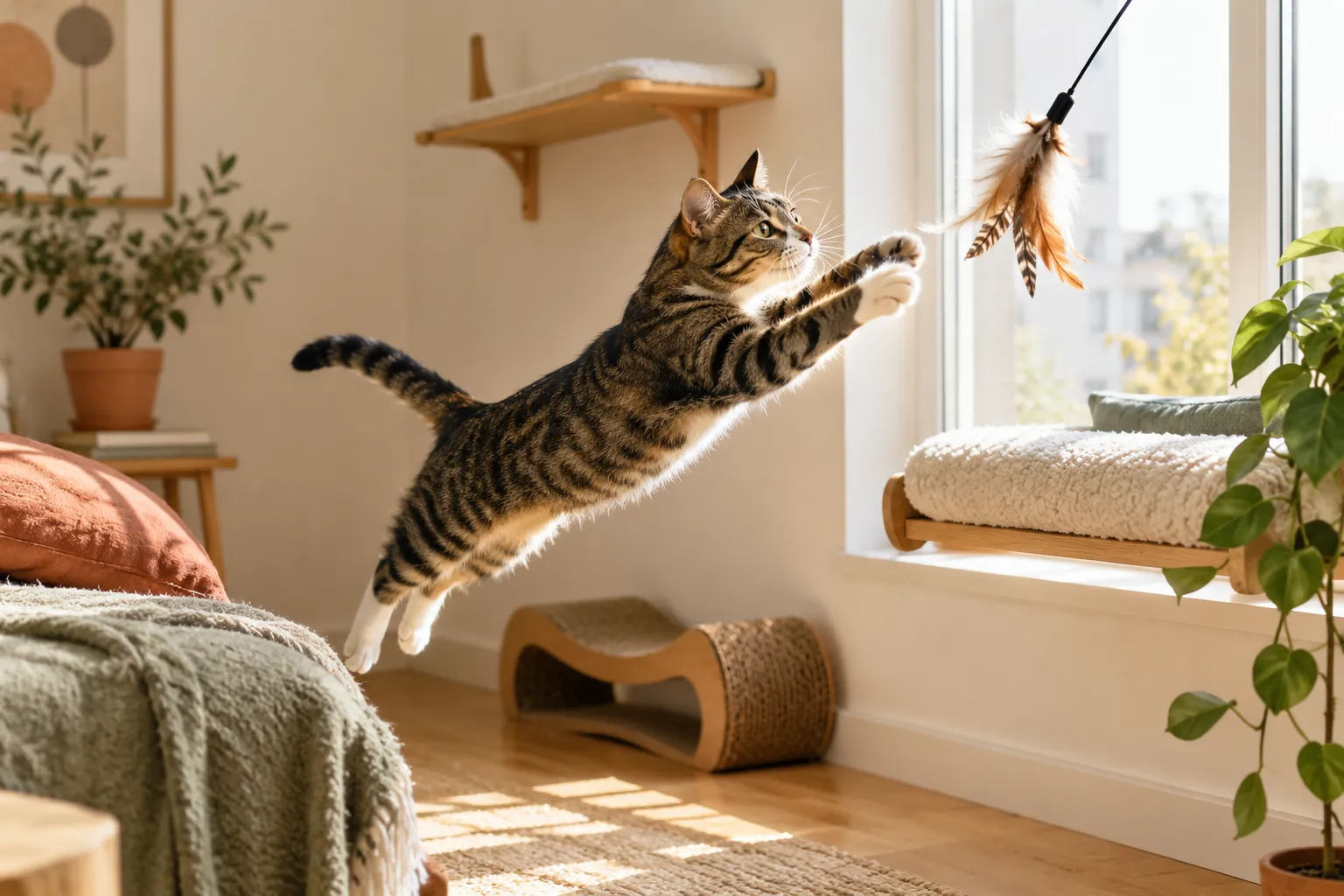
- Warm-up (2 minutes): slow, low movements with the wand toy to trigger stalking behavior.
- The hunt (5-8 minutes): vary speed and direction, let the cat "catch" the toy every few minutes.
- The kill (1 minute): let the cat fully capture and hold the toy, this closes the predatory loop.
- Cool down and feed (2-4 minutes): offer a small treat or meal right after play, mimicking the natural eat-after-hunt pattern.
Common mistake: ending play abruptly without letting the cat "win." A cat that never gets to fully catch the toy stays wound up, which often shows up as nighttime zoomies or ankle attacks.
How Do You Enrich a Cat's Environment Without Clutter?
You can enrich a small apartment cat's environment without adding clutter by rotating toys instead of leaving them all out, and by leaning on sensory enrichment that takes up zero floor space. Sight, sound, and smell all count as entertainment, and none of them require furniture.
Low-footprint ideas worth trying:
- Rotate three to five toys weekly, storing the rest in a closed bin.
- Set up a bird feeder outside a window the cat can access.
- Offer cat-safe plants like catnip or silvervine occasionally, not constantly, to keep the novelty high.
- Play "cat TV" videos (birds, fish, or squirrel footage) for short stretches, not all day.
- Use a slow feeder as both a meal tool and a puzzle toy in one object.
If you have a naturally curious or vocal breed, understanding its baseline personality helps you gauge how much novelty it actually needs, some cats genuinely want less, not more.
What Are Common Mistakes When Entertaining a Cat in a Small Apartment?
The most common mistake is buying more toys instead of using the toys already in the apartment more intentionally. Volume doesn't solve boredom; rotation and structure do.
Other frequent mistakes:
- Leaving every toy out at once, so nothing feels new.
- Skipping vertical space entirely because the apartment "feels too small" for a cat tree.
- Playing on a random schedule instead of two predictable daily sessions.
- Relying only on a laser pointer, which never gives the cat a physical object to "catch," leaving predatory drive unresolved.
- Punishing zoomies or night pouncing instead of redirecting that energy into a scheduled play session earlier in the day.
How Do You Know If Your Cat Is Bored or Stressed in a Small Apartment?
A bored or stressed apartment cat usually shows changes in sleep, grooming, or play behavior rather than dramatic symptoms. Watching for shifts is more useful than looking for one single sign.
Watch for:
- Sleeping noticeably more or less than usual, check typical cat sleeping habits for a baseline comparison.
- Overgrooming to the point of bald patches.
- Sudden ankle-pouncing or nighttime hyperactivity.
- Knocking items off shelves repeatedly, which can be attention-seeking or a sign of under-stimulation.
- Tail and body language shifts, learning how to read your cat's mood and understanding what tail wagging actually means will help you catch these signals early rather than after they escalate.
Frequently Asked Questions
Can a cat be happy in a small apartment with no yard access?
Yes. A cat can be fully content in a small apartment as long as it gets structured play, vertical space, and mental stimulation like puzzle feeders. Outdoor access is not a requirement for a happy indoor cat.
How many toys does an apartment cat actually need?
Five to eight toys total is plenty, rotated in small groups of two or three at a time. Owning dozens of toys left out permanently tends to reduce their novelty faster than it adds enrichment.
Is a cat tree necessary in a studio apartment?
It's not strictly necessary, but it's one of the highest-value purchases for a small space because it adds vertical territory without using floor area. A slim, floor-to-ceiling model fits most studio corners.
What if my landlord won't allow wall-mounted shelves?
Use tension-mounted cat trees that wedge between the floor and ceiling, or door-hung perches. Both add vertical enrichment without any drilling or wall damage.
How long should daily play sessions be for an apartment cat?
Two sessions of 10 to 15 minutes each, roughly 12 hours apart, work well for most adult cats. Kittens and high-energy cats may need a third short session.
Do laser pointers count as real entertainment?
They're fine as a warm-up but shouldn't be the only toy used, since the cat never gets to physically catch anything. Follow laser play with a toy the cat can actually grab and "kill" to close the hunting cycle.
Can window watching replace active play?
No. Window watching is great passive enrichment, but it doesn't replace the physical activity and predatory satisfaction that comes from structured wand play.
Conclusion
Entertaining a cat in a small apartment isn't about buying every toy on the shelf or wishing for more square footage. It comes down to using the vertical space you already have, keeping a consistent play routine, and rotating a small set of toys so nothing goes stale. Start this week with one change: add a window perch or a single wall shelf, and commit to two short play sessions a day for seven days straight. Watch how your cat's behavior shifts, calmer evenings, less shelf-knocking, more relaxed sleep. That's the real measure of success, and it costs a lot less than most owners assume.
Sources
- Ellis, S.L. et al., "AAFP and ISFM Feline Environmental Needs Guidelines," Journal of Feline Medicine and Surgery, 2013.
- Ohio State University Indoor Pet Initiative, "Enriching Your Indoor Cat's Environment," indoorpet.osu.edu.