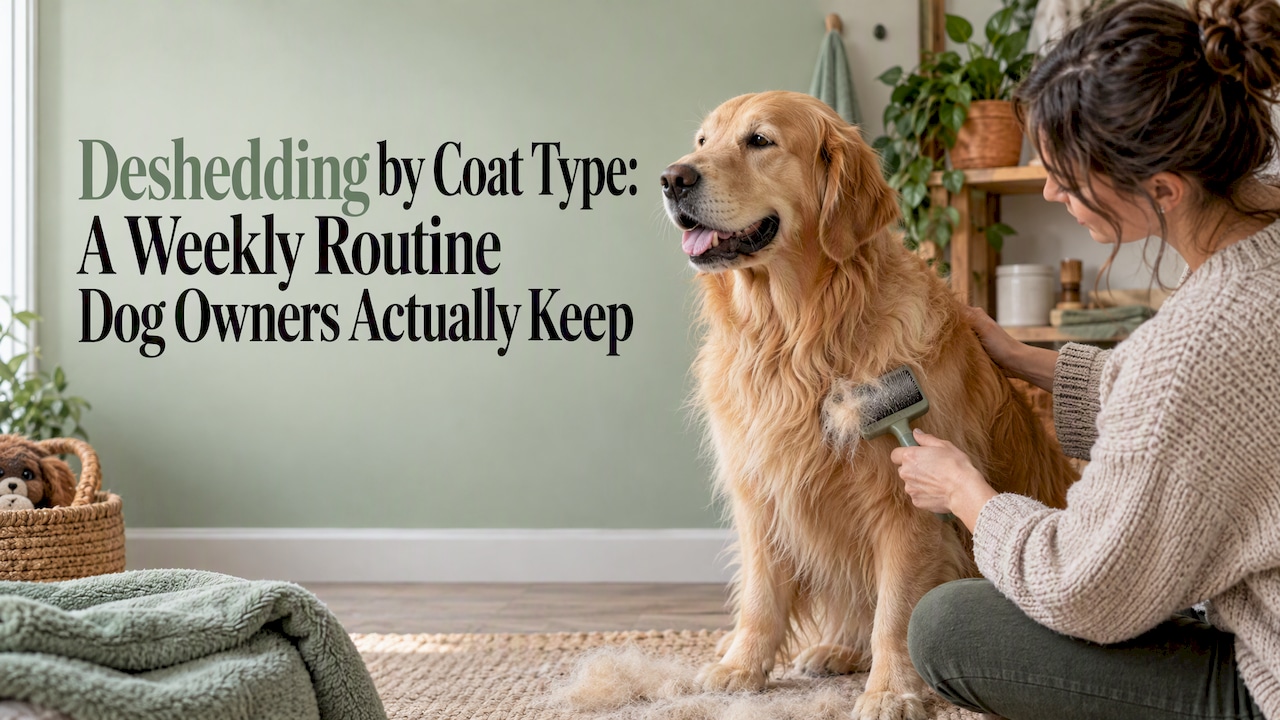

Deshedding doesn’t stop shedding, it collects loose fur before it lands on your floors and furniture. The most effective approach is a short, regular routine: choose the right tool for your dog’s coat, brush consistently, and add a seasonal bath and blow-dry when the undercoat starts to release in bulk. If shedding suddenly spikes or your dog’s skin looks irritated, a veterinary visit comes before any grooming session.
TL;DR:
- Regular, short grooming sessions are essential during peak shedding seasons, with outside locations and consistent timing helping dogs settle into routines.
- Using coat-appropriate tools like slicker brushes, undercoat rakes, or grooming gloves ensures effective deshedding without irritating the skin.
- Bathe only when necessary during seasonal blows, and always dry thoroughly to prevent undercoat trapping and tangling.
- Avoid deshedding on damp coats and stop grooming if skin irritation, sores, or unusual shedding patterns are present, consulting a vet if needed.
- Owners should view deshedding as ongoing management supported by routine, patience, and the right tools, rather than a one-time or cure-all solution.
Table of Contents
- A step-by-step deshedding routine you can repeat weekly
- Match deshedding tools to your dog’s coat type
- When a deshedding bath helps, and how to dry it out right
- When not to deshed, and signs that need a veterinarian
- Professional deshedding versus doing it yourself
- Our quick deshedding checklist
- Post-deshedding care: keeping skin comfortable after a session
- Why deshedding matters beyond a cleaner floor
- Mistakes that undo a good deshedding routine
- What keeps owners consistent with deshedding
- Find curated deshedding tools and routines on our site
- FAQ
- Sources
A step-by-step deshedding routine you can repeat weekly
A good deshedding routine doesn’t need to be complicated. It needs to happen on a schedule, in the right order, with the right amount of patience.
Start by picking a spot, ideally outdoors, since deep deshedding sessions release a surprising volume of loose fur and cleanup is far easier off the carpet, a point groomers and AKC breeders routinely recommend. Gather your tools before you bring the dog over, and run your hands along the coat first to check for mats, sores, or tender spots.
- Dry brush the full coat first to remove surface tangles and loose hair.
- Give a deshedding bath only if the coat is dirty or you’re heading into a seasonal blowout.
- Dry thoroughly with a towel or blow-dryer, since a damp undercoat traps loose hair instead of releasing it.
- Work through the coat with a deshedding tool or undercoat rake, following the direction of hair growth.
- Finish with a comb to catch anything the rake missed, then brush once more for a clean, settled coat.
Daily short sessions work best during the heavy shedding stretches of late spring and late fall, when most breeds blow their undercoat. Outside those windows, two or three sessions a week usually keeps shedding manageable. Keep each session brief to maintain your dog’s comfort, reward your dog throughout, and split the work into two shorter sessions if your dog gets fidgety or anxious partway through.
Pro Tip: Brush in the same spot and at the same time of day each session. Dogs settle into grooming routines faster when the location and timing stay predictable.
Match deshedding tools to your dog’s coat type
Buying the wrong tool is the most common reason deshedding feels like a losing battle. The right choice depends entirely on coat type, and VCA Animal Hospitals recommends matching both tool and frequency to the breed’s coat.
- A slicker brush lifts surface tangles and loose hair, useful as a first pass on almost any coat.
- An undercoat rake reaches deeper into double coats to loosen packed fur before it mats.
- A deshedding tool or blade pulls out loose undercoat in bulk, best reserved for the heaviest shedders.
- A grooming glove suits short, smooth coats where a rake or blade would feel too aggressive.
- A wide-tooth comb finishes long or curly coats, separating strands the other tools can’t reach cleanly.
Double-coated breeds need the rake and deshedding tool most during seasonal blows, while single-coated, short-haired dogs usually do fine with a glove and occasional slicker brush pass. Curly coats need the wide-tooth comb more often to prevent tangling between sessions.
Whatever tool you pick, test it on a small patch first and use light, even pressure. Digging in too hard scrapes skin rather than lifting fur. Rinse and dry metal tools after each use, check rake and blade teeth for bending or dulling every few months, and replace anything that starts pulling instead of gliding.
When a deshedding bath helps, and how to dry it out right
A deshedding bath makes the most difference during seasonal blowouts, when the undercoat is loosening faster than brushing alone can keep up with. Outside those stretches, bathing too often can strip natural oils and leave skin dry, so stick to brushing and save the bath for when it’s genuinely needed.
- Look for a deshedding shampoo and conditioner formulated for undercoat release, and skip heavily fragranced formulas on dogs with sensitive skin.
- Towel-dry first, then finish with a blow-dryer or high-velocity dryer on a cool or low setting, never hot.
- Comb through the coat in sections while it dries, since loosened undercoat releases most easily when the hair is damp but moving.
Groomers often rely on high-velocity dryers paired with line-combing during seasonal shedding to remove undercoat safely without damaging the topcoat. Watch for redness or flaking after a bath. It usually means the shampoo or water temperature was too harsh for that dog’s skin.
When not to deshed, and signs that need a veterinarian
Shaving a double-coated dog to “solve” shedding usually backfires. The coat regulates body temperature, and shaving can disrupt that system along with healthy regrowth, which is why most groomers reserve it for surgery or severe matting only.
Some shedding patterns point to something beyond seasonal coat blow. Check for these before you start a session, and stop if you spot any of them:
- Sudden, heavy shedding that’s clearly outside the usual seasonal pattern.
- Bald patches or localized hair loss rather than even thinning.
- Scaling, flaking, or skin that looks inflamed.
- Constant scratching, licking, or visible sores.
Shedding is a natural process, but shedding combined with skin irritation or a sudden change warrants a vet visit rather than a heavier brush. Diet and overall health show up in coat condition too, so a persistently dull or thinning coat is worth mentioning at your next checkup.
Professional deshedding versus doing it yourself
A professional deshedding appointment typically includes deep undercoat removal, a high-velocity dryer, and the kind of line-combing technique that takes practice to do well at home. That combination is why groomers can clear more undercoat in one visit than most owners manage with a brush alone.
A pro visit makes the most sense when:
- Matting has progressed past what a rake or comb can safely work through.
- Your dog is anxious or reactive and handles better with an experienced groomer.
- You’re short on time during a heavy seasonal blow.
- You don’t yet own the right tools for your dog’s coat type.
Many owners book a professional deshedding treatment once or twice a year, around the spring and fall coat blows, and handle routine brushing at home the rest of the year. Before your appointment, ask what the treatment includes and how to maintain results with brushing in between visits.
Our quick deshedding checklist
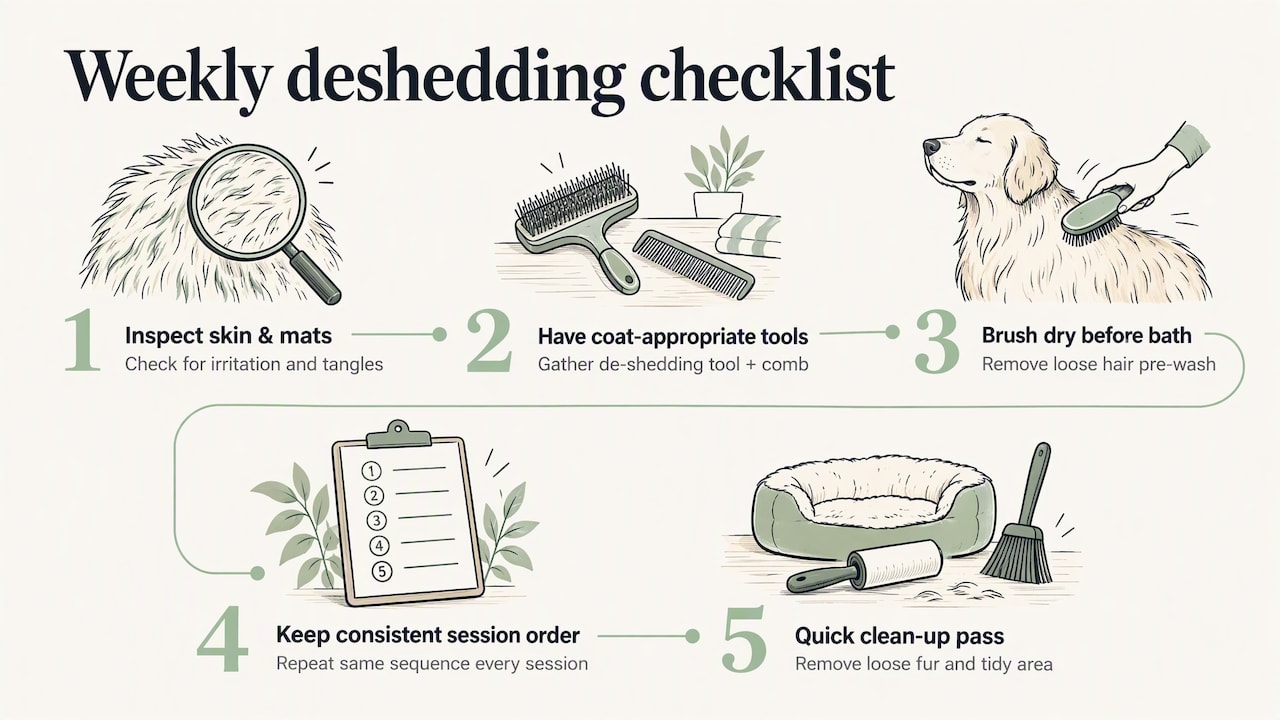
Our checklist distills the routine into five checks: skin and mat inspection, coat-appropriate tools on hand, dry brush before any bath, consistent session order, and a quick clean-up pass after. It lines up with the guidance groomers and veterinary sources give for coat care, and it’s built to be realistic for a busy week, not a perfect one.
Post-deshedding care: keeping skin comfortable after a session
A deshedding session, especially one that includes a bath, can leave skin feeling dry or tight if you skip the follow-up steps. Run your hands over the coat afterward and check for flaky or tight-feeling skin, particularly in dogs prone to dry skin or allergies.
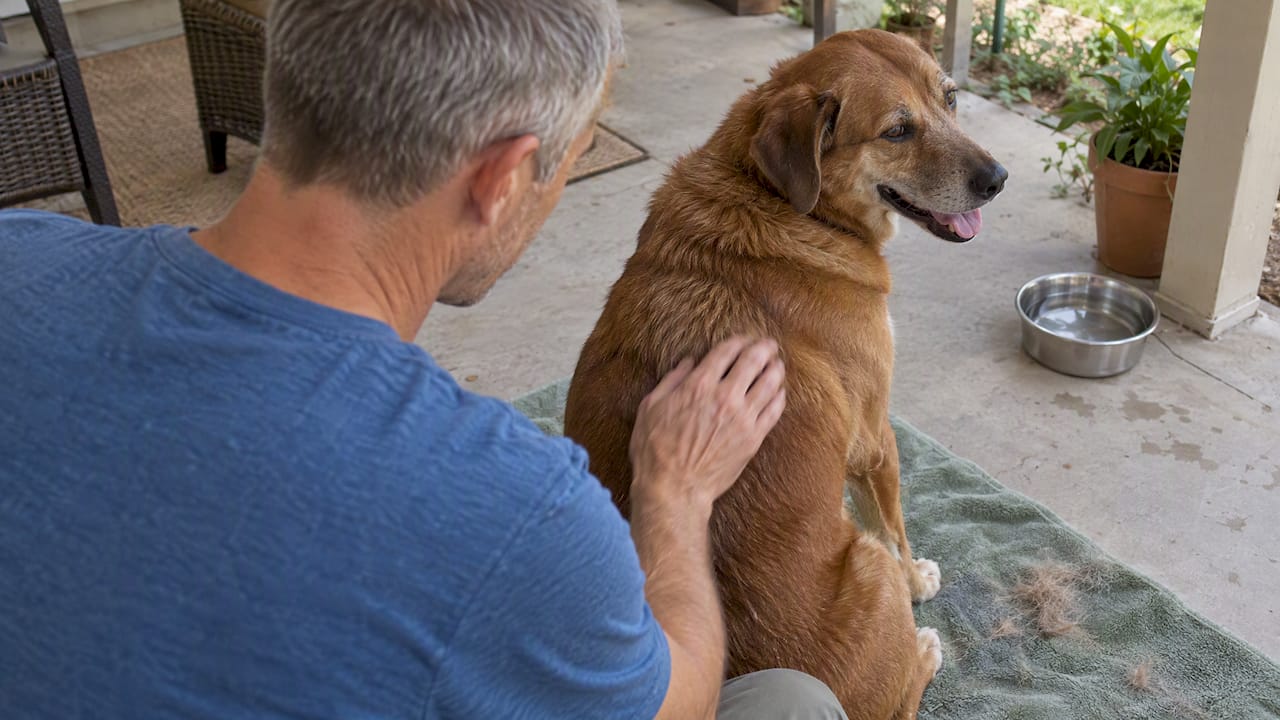
If the coat feels dry, a light leave-in conditioner made for dogs can help restore moisture without weighing down the fur. Fresh water matters just as much. Dogs that just had a heavy brushing or bathing session benefit from easy access to water, since grooming sessions can be warm and tiring, especially outdoors.
Avoid piling on more products right after a bath. Give the skin a day to settle before applying anything new, and watch for redness that wasn’t there before the session. That kind of reaction usually points to a product or water temperature that didn’t agree with your dog’s skin.
A quick once-over with a soft brush a day or two after a deeper deshedding session helps you catch any leftover loose fur the first pass missed, and it gives you another chance to spot irritation early. Think of post-session care as the quiet second half of the routine. It’s easy to skip, but it’s what keeps skin comfortable between sessions instead of raw or flaky by the time the next one rolls around.
Why deshedding matters beyond a cleaner floor
Deshedding does more than cut down on fur drifting across your house. A coat free of loose, packed undercoat regulates temperature better, since trapped fur can interfere with the insulating layer dogs rely on in both hot and cold weather.
Regular brushing also gives you a built-in health check. Running your hands through the coat every week means you’re far more likely to catch a new lump, a tick, or a sore spot early, before it becomes a bigger problem. Shedding itself is a natural, unavoidable process, but staying on top of it means you notice when something about it changes.
There’s a cleanliness angle too, and it goes beyond fur on the couch. Mats trap dirt, moisture, and bacteria against the skin, creating conditions for irritation or infection. Regular deshedding prevents mats from forming in the first place, which keeps skin drier and less prone to the hot spots that show up under tangled fur.
For allergy-prone households, a consistent deshedding routine also means less loose fur circulating through the air and settling on furniture, which can make a real difference day to day even though it won’t eliminate allergens entirely.
Mistakes that undo a good deshedding routine
Overbrushing is the most common misstep. Pressing too hard or brushing the same spot repeatedly irritates skin and can thin the coat unevenly instead of distributing the work across the whole body.
Pulling at mats instead of working them loose gradually is another frequent problem. It hurts, and dogs that associate grooming with pain start resisting every future session. Work mats from the edges inward with your fingers or a mat splitter before reaching for a rake or comb.
Skipping the test patch is a small mistake with an outsized cost. A tool that’s fine on a thick double coat can scrape a short-haired dog’s skin raw in seconds. Always try a new tool on a small area first.
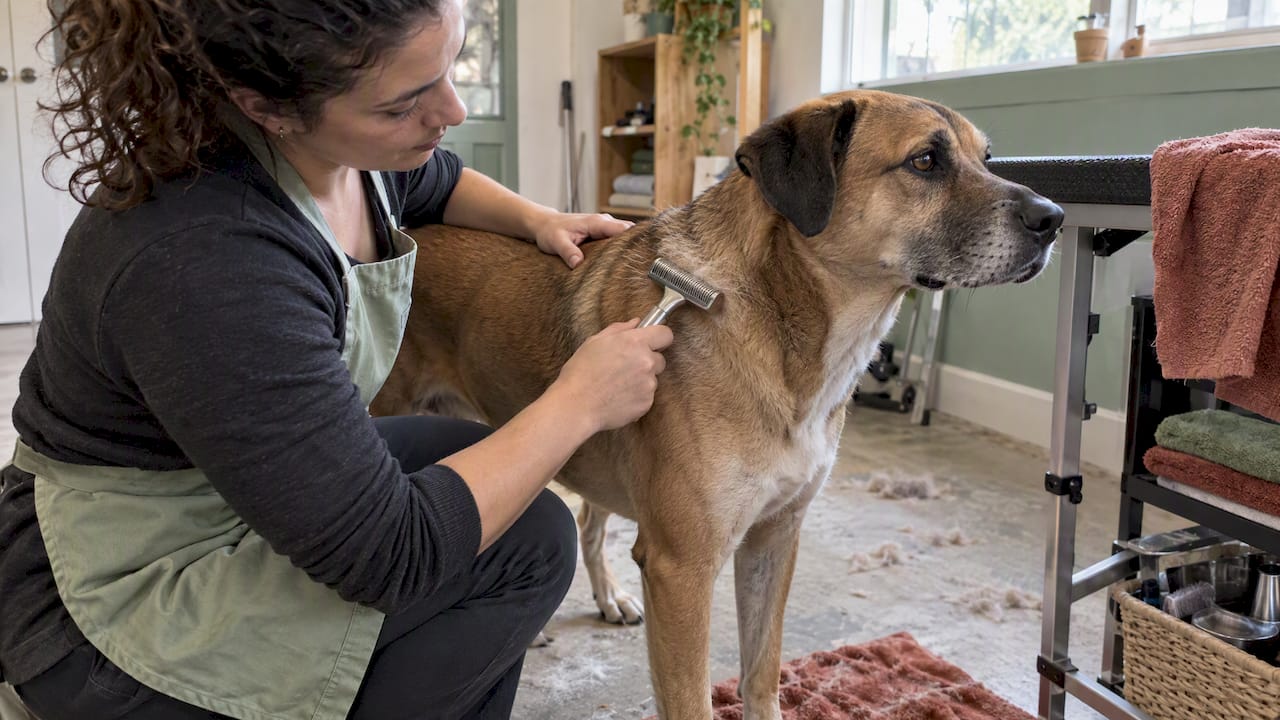
Last, doing a thorough deshedding session on a damp or wet coat backfires, since loosened undercoat tends to clump and tangle instead of releasing cleanly. Dry the coat fully first, then work through it with your tools.
What keeps owners consistent with deshedding
The owners who stick with deshedding aren’t the ones with the fanciest tools. They’re the ones who accept it’s management, not a cure, and build it into a habit they can actually keep up. A short weekly session in the same spot, with the same tools laid out, beats an ambitious deep-clean that only happens once a season. If you’ve found a routine or a trick that keeps your dog calm through a session, it’s worth sharing with other owners figuring out the same thing.
— Edwin
Find curated deshedding tools and routines on our site
We offer deshedding guides and product picks specifically for owners who want a shorter path to the right tools without trial and error on every brush and rake. Our recommendations follow the same coat-by-coat logic covered here, drawn from AKC and veterinary grooming guidance, and we keep them updated as new tools come onto the market.

- Browse coat-specific starter kits for double-coated, short-haired, and curly breeds.
- Check seasonal grooming guides timed to spring and fall shedding peaks.
- Compare deshedding tools side by side before you buy.
Visit Best Pets Corner for the full set of guides and curated picks to build out your dog’s deshedding kit.
FAQ
Is deshedding good for your dog?
Deshedding is good for most dogs because it removes loose undercoat before it mats, reduces the chance of trapped dirt and bacteria against the skin, and gives you a regular chance to spot lumps or sores early. It works best as an ongoing routine rather than a one-time fix, since shedding itself is a natural process that deshedding manages rather than eliminates.
What is the best way to deshed a dog?
The most reliable method is a short, regular routine: dry brush first, bathe only when the coat is dirty or blowing its coat seasonally, dry thoroughly, then work through with a deshedding tool and comb matched to your dog’s coat type. Consistency matters more than any single tool, and sessions done outdoors make cleanup far easier.
When not to touch a dog?
Hold off on a deshedding session if you find sores, inflamed skin, severe matting that pulls at the skin, or any area your dog reacts painfully to when touched. In those cases, a veterinary check comes before grooming, since sudden or excessive shedding paired with skin irritation can point to an underlying health issue.
Is it better to deshed a dog wet or dry?
A dry coat works best for the main deshedding pass, since a damp undercoat tends to clump instead of releasing cleanly through a rake or comb. A deshedding bath has its place during heavy seasonal blowouts, but the coat needs to be dried thoroughly afterward before you comb through it again.
Sources
- Grooming and coat care for your dog | VCA Animal Hospitals