Have you ever wondered what your cat is trying to tell you with a slow blink or tail swish? Cats use subtle body language and behaviors to express their moods and emotions. Learning these cues allows us to better meet their needs and strengthen the bond with our feline companions.
This article will explore the 7 key areas cat owners should observe to decode kitty’s communications, discover the meaning behind different postures and vocalizations, and recognize potential signs of illness or stress. Let’s delve into the secret world of cats!
Why Understanding Cat Communication Matters
Unlike dogs, cats are quiet, mysterious creatures. But make no mistake - they have plenty to say! We just need to speak their language.
Learning your cat's body language allows you to respond appropriately to their needs, avoid misinterpreting behaviors, and ensure good health and enrichment. It also prevents incorrect assumptions. For example, exposing their belly often signals trust and comfort, not a request for rubs.
When we better understand our cats, we can provide better care.
The 7 Ways To Read Your Cat’s Mood
1. Tail Talk: Decoding Feline Tail Signals

Cats use their tails to communicate strong messages. Here are some key positions and what they mean:
• Tail Up or Curved Over Back: Happy, confident, friendly greeting
• Straight Up With Quivering Tip: Excited, anticipating something positive
• Puffed Up or Bushy: Fearful, threatened
• Lowered or Between Legs: Insecure, anxious
• Thrashing: Irritated or overstimulated
• Relaxed Swishing: Mildly interested/deciding on action
Of course, individual cats have unique quirks, but in general, a high or “question mark” tail indicates a positive mood, while a tucked or thrashing tail reveals discomfort.
2. Listen Up! Cat Vocalization Meanings
Cats “speak” through various vocalizations too, some more subtle than others!
• Short High Meows: Greeting, seeking attention
• Long Drawn-Out Meows: Demanding something, complaining
• Multiple Meows: Excitement, stronger demands
• Low Pitched Meow: Discomfort, warning
• Purring: Contentment, relaxation, self-soothing
Growls, hisses and spitting clearly signal “back off!” Other friendly sounds include chirps (greeting/excitement) and the distinctive chattering when spotting prey.
While body language provides context, tuning into your cat’s voice reveals valuable insight. An urgent cry combined with hiding may indicate illness or injury.
3. Look Deep Into Their Eyes: Decoding Cat Eye Signals
Cats say a lot with their eyes. Here’s what to look for:
• Slow Blinks (“Cat Kisses”): Affection, trust, calmness
• Dilated Pupils: Fear, excitement, arousal
• Constricted Pupils/Slits: Anger, bright light, hunting focus
• Staring: Dominance/aggression warning, or bid for attention
Half-closed relaxed eyes, full eye contact, and slow blinking all indicate comfort and trust.
Sudden pupil dilation or constriction signals strong emotion - observe if play or fear motivates this. Never engage in long staring contests, which can be perceived as challenging by cats.
4. Reading Ear Signals
Ear positions add more layers to your cat’s mood:
• Ears Forward: Relaxed yet alert interest
• Ears Flattened: Fearful/Defensive
• Ears Back and Flat: Extreme fear, ready to attack
• Rotating Ears: Pinpointing sounds
Generally, forward or sideways ear positioning reveals contentment, whereas flattened ears show rising anxiety levels.
5. What Their Posture Tells You
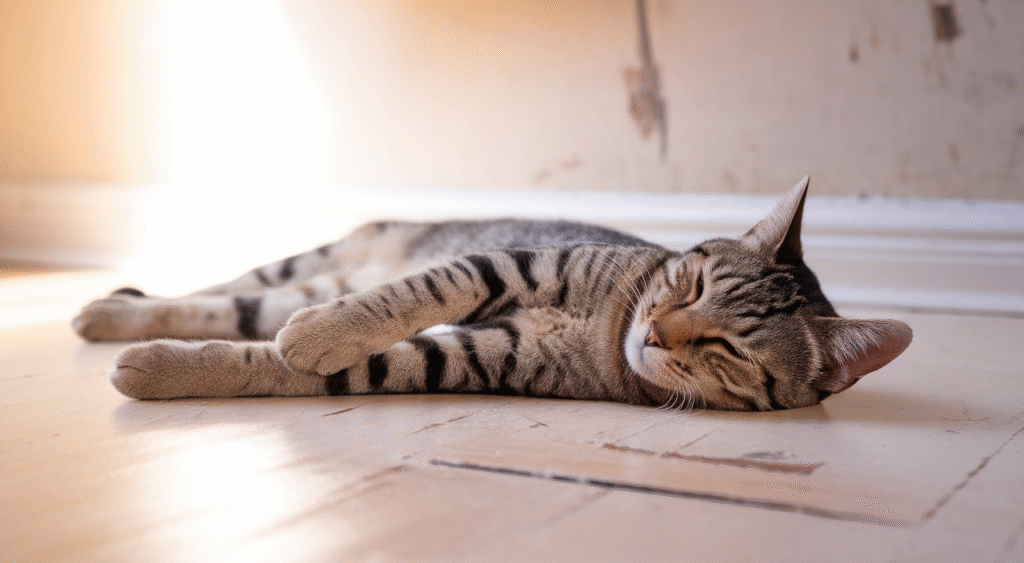
Your cat’s full body posture gives clear insight into their mental state:
Relaxed Body Language
• Full-Body Stretches
• Flopped Over On Side or Back
• Balanced, Easy Gait
Tense Body Language
• Low Crouching
• Muscle Tension
• Sudden Bolting Movements
Arched backs with fluffed fur (the classic “Halloween Cat”) warn others away, while a flopped over cat indicates total comfort in their environment. Posture can directly point to illness too - lack of grooming or moving less are key signs.
Belly exposure is two-sided. It often signals relaxation and trust, but refrain from rubbing their tummies unless permitted.
6. Reading Whisker Positions
Don’t overlook your cat’s whiskers and eyebrows. These hair-like sensors relay mood information:
• Neutral Whisker Positions: Held at slight forward rest
• Whiskers Pushed Forward: Curious, mildly excited
• Whiskers Pulled Back: Anxious, overwhelmed, threatened
Forward whiskers displaying investigation combined with friendly greets indicate curiosity not agitation. Focus on other body parts like the tail to confirm mood.
7. Behavioral Insights
Your cat's daily activities also provide wellness insights:
Positive Behaviors
• Grooming Themselves
• Playing
• Rubbing On Objects/You
• Normal Eating/Drinking
Potential Red Flags
• Hiding
• Bathroom Accidents
• Over or Under-Eating
• Aggression/Irritability
• Excessive Meowing/Yowling
Healthy cats keep up consistent grooming and bathroom habits. Personality awareness helps assess warning signs too. Does missing one meal signal serious illness or mere finickiness? Use your judgment. When in doubt, call your vet.
Putting It All Together: Context Matters
No single body part or behavior reveals the complete picture - view your cat’s signals collectively. A relaxed posture paired with friendly eye contact tells a happier tale than pulled back whiskers accompanying defensive hisses.
Likewise, understand each cat's individual quirks and norms. Changes in patterns can indicate evolving medical or emotional issues requiring attention - especially combined with reduced appetite/activity levels.
Work to see through your cat’s eyes. Repeated hiding might show insecurity over scoldings vs. simple enjoyment of enclosed spaces. Know their history and personality.
When To Consult The Vet
Contact your veterinarian promptly if your cat displays:
• Hiding More Often
• Grooming Issues
• Eliminating Outside The Litterbox
• Changes In Appetite/Water Intake
• Excessive Meowing/Yowling
• Unexplained Weight Loss
• Lethargy
Persistent behavioral or physical changes almost always signify an underlying issue needing medical attention. Especially combined with signs like flattened ears, lack of grooming, or unwarranted aggression, illness likely causes your cat’s distress.
Catching problems early vastly improves treatment options. Trust your judgment - you know your cat best.
Supporting A Happy Cat
While health concerns require vet intervention, you greatly influence your cat’s baseline mood and emotional wellness through:
• Providing Safe Hideaways/Perches
• Toys/Play Encouragement
• Consistent Schedules
• Positive Reinforcement Training
• Respecting Their Space
• Ensuring Proper Nutrition/Litterbox Conditions
Conclusion
Cats engage in intricate communication - if we fine-tune our understanding. Train your eye to interpret ear positions, vocalizations, pupil dilation shifts, tail flicks and posture nuances indicating your cat’s inner world.
You’ll be amazed how many insights surface. When we embrace our cats’ true natures and speak their language, the bond between species grows exponentially, revealing the mysteries of our feline friends.