


You've just brought home an adorable 8-week-old bundle of fur, and while you're melting at their cuteness, you're also wondering how on earth you're going to turn this tiny tornado into a well-behaved companion. Here's the exciting news – your puppy's brain is like a super-absorbent sponge right now, and this is actually the perfect time to start basic training! 🐾
Many new dog owners think their puppy is "too young" to learn commands, but that couldn't be further from the truth. At 8 weeks old, your puppy is entering a critical learning period where they're naturally wired to absorb new information and form lifelong habits.
Key Takeaways
- Start immediately: 8-week-old puppies are in their prime learning phase and can begin basic command training right away
- Keep sessions short: 5-10 minute training sessions work best for young puppies' attention spans
- Use positive reinforcement: Treats, praise, and play are your most powerful training tools
- Focus on essential commands: Start with "sit," "come," "stay," and "no" before moving to advanced commands
- Be consistent: Everyone in your household should use the same commands and training methods
Understanding Your 8-Week-Old Puppy's Learning Capabilities
When you bring home an 8-week-old puppy, you're getting a little learning machine! At this age, puppies are in what experts call the "socialization period" (3-14 weeks), which is absolutely crucial for their development.
What Makes This Age Perfect for Training?
Your puppy's brain is developing rapidly, and they're naturally curious about everything around them. Unlike older dogs who might have developed bad habits, your 8-week-old puppy is a blank slate ready to learn. They're also:
- Highly motivated by food (perfect for treat-based training)
- Eager to please their new family
- Less fearful of new experiences
- Building neural pathways that will last a lifetime
Realistic Expectations for Young Puppies
Let's be honest – your 8-week-old puppy won't be performing circus tricks anytime soon! Here's what you can realistically expect:
What they CAN learn:
- Simple one-word commands
- Basic response to their name
- Where to go potty (with lots of practice)
- Basic impulse control
What they're NOT ready for:
- Complex multi-step commands
- Perfect obedience (they're babies!)
- Long training sessions
- Advanced tricks
Essential Dog Training Commands: The Foundation Four
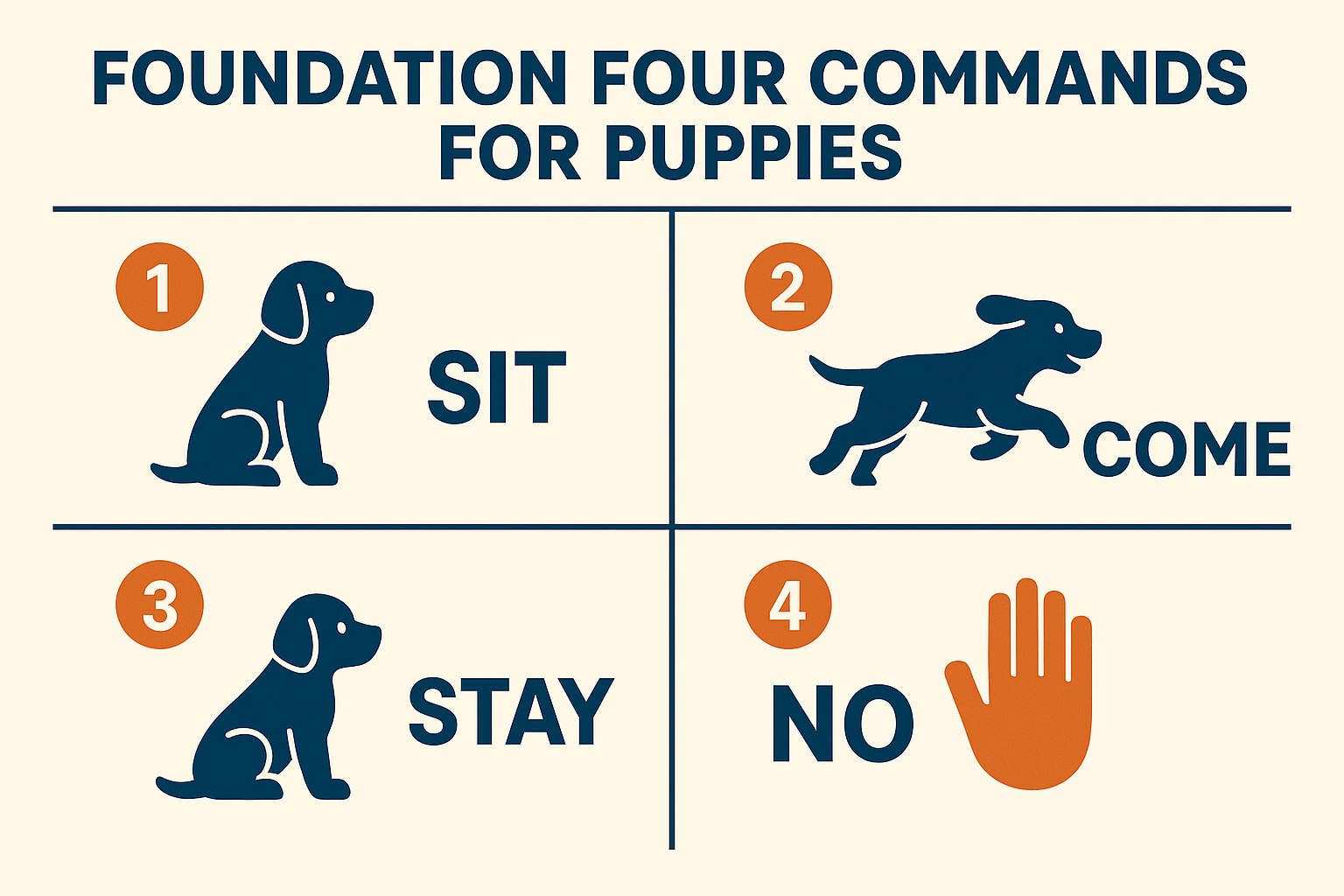
When it comes to Dog Training Commands 101: How Do You Train An 8-Week-Old Puppy, I always recommend starting with these four essential commands. Think of them as your puppy's "life skills" – they'll keep your pup safe and make your life much easier!
1. Teaching "Sit" - The Gateway Command
"Sit" is often the first command puppies learn because it's natural and relatively easy. Here's my step-by-step approach:
Step 1: Get your puppy's attention
- Hold a small, high-value treat close to their nose
- Let them smell it but don't give it yet
Step 2: Guide them into position
- Slowly lift the treat over their head toward their back
- Their bottom should naturally touch the ground as they follow the treat
Step 3: Mark and reward
- The moment their bottom hits the ground, say "Sit!" clearly
- Immediately give the treat and praise enthusiastically
Step 4: Practice and repeat
- Repeat 3-5 times per session
- Practice 2-3 times daily
Pro Tip: Don't push your puppy's bottom down! Let them figure it out naturally – this builds confidence and understanding.
2. Mastering "Come" - The Safety Command
The "come" command could literally save your puppy's life one day. Here's how to teach it:
Step 1: Start in a safe, enclosed space
- Begin indoors or in a fenced yard
- Remove distractions initially
Step 2: Get down to their level
- Squat or sit on the floor
- Make yourself exciting and inviting
Step 3: Call them enthusiastically
- Say "Come!" in a happy, high-pitched voice
- Pat your legs or clap your hands
Step 4: Reward generously
- When they come to you, make it the BEST thing ever
- Give treats, praise, and gentle pets
Important: Never call your puppy to "come" for something they perceive as negative (like ending playtime or giving medicine). You want "come" to always mean good things happen!
3. Building "Stay" - The Patience Builder
"Stay" teaches impulse control and is incredibly useful for safety. Start super simple:
Step 1: Begin with "sit"
- Have your puppy sit in front of you
- Hold your hand up in a "stop" gesture
Step 2: Take one small step back
- Say "Stay" clearly
- Wait just 1-2 seconds initially
Step 3: Return and reward
- Step back to your puppy (don't call them to you)
- Say "Good stay!" and give a treat
Step 4: Gradually increase duration and distance
- Add one second at a time
- Only move further away once they master shorter stays
4. Establishing "No" - The Boundary Setter
"No" isn't about punishment – it's about teaching boundaries. Here's the gentle approach:
Step 1: Use a calm, firm voice
- Say "No" in a low, serious tone (not shouting)
- Be consistent with your tone every time
Step 2: Redirect immediately
- Show them what they SHOULD do instead
- Offer an appropriate toy if they're chewing something forbidden
Step 3: Reward the correct behavior
- Praise them when they stop the unwanted behavior
- Give attention for good choices
Creating the Perfect Training Environment
Setting up your puppy for success is half the battle! Here's how to create an ideal learning environment:
Timing is Everything
Best times to train:
- Before meals (when they're hungry for treats)
- After naps (when they're alert but not overstimulated)
- During natural calm moments
Avoid training when:
- Your puppy is overly excited or hyper
- Right after meals
- When they need to go potty
- If they seem tired or stressed
Setting Up Your Space
Indoor training setup:
- Choose a quiet room with minimal distractions
- Remove toys and other tempting items
- Have treats ready and easily accessible
- Ensure good lighting so your puppy can see your gestures
Outdoor considerations:
- Start in your own yard before venturing to new places
- Keep initial sessions in enclosed areas
- Watch for distractions like other animals or loud noises
The Science Behind Positive Reinforcement Training
Understanding why positive reinforcement works will make you a better trainer. When your puppy does something you like and receives a reward, their brain releases dopamine – the "feel good" chemical. This creates a positive association with the behavior, making them more likely to repeat it.
Types of Rewards That Work
High-value treats:
- Small pieces of cooked chicken
- Freeze-dried liver
- Commercial training treats
- Cheese (in moderation)
Praise and attention:
- Enthusiastic "Good dog!"
- Happy, high-pitched voice
- Gentle petting and scratches
Play rewards:
- Brief tug-of-war games
- Throwing a favorite toy
- Chase games (let them "win" sometimes)
Timing Your Rewards
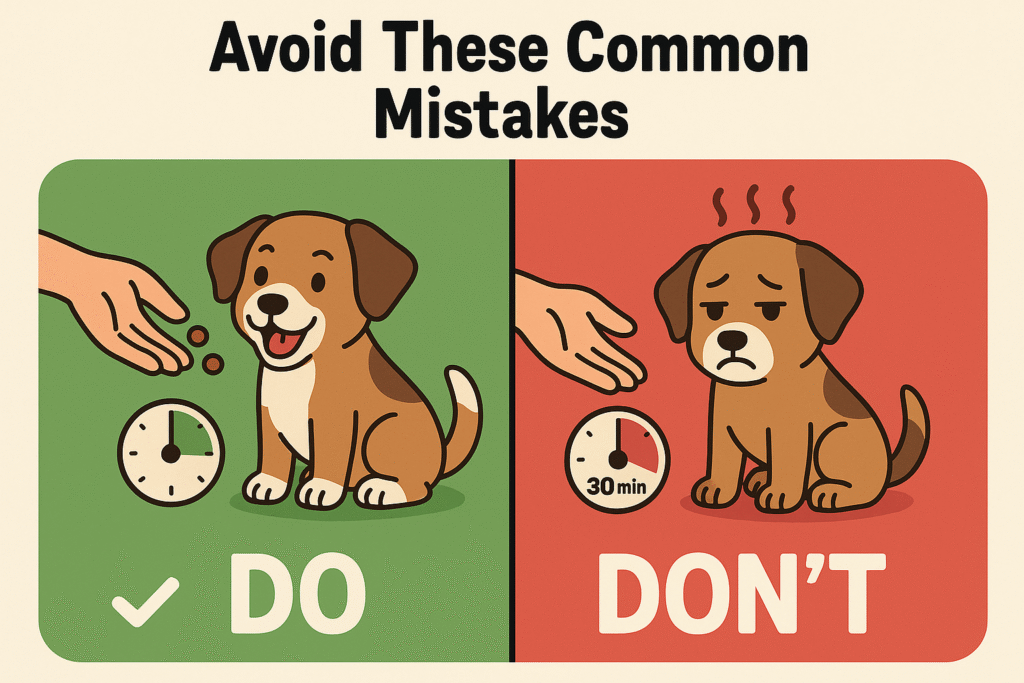
The 3-second rule is crucial: You have about 3 seconds after the desired behavior to reward your puppy, or they won't connect the reward with the action. This is why having treats ready and being attentive is so important!
🐕 Puppy Training Progress Tracker
Track your 8-week-old puppy's command learning journey!
Common Mistakes to Avoid When Training Your 8-Week-Old Puppy
Even with the best intentions, new puppy parents often make these training mistakes. Let me help you avoid them:
Mistake #1: Training Sessions That Are Too Long
The problem: Puppies have incredibly short attention spans – think toddler-level! A 20-minute training session will just frustrate both of you.
The solution: Stick to 5-10 minute sessions, 2-3 times per day. Quality over quantity!
Mistake #2: Inconsistent Commands
The problem: Using "sit," "sit down," and "sitting" interchangeably confuses your puppy.
The solution: Choose one word per command and make sure everyone in your household uses the same word.
Mistake #3: Delayed Rewards
The problem: Waiting too long to reward good behavior breaks the connection between action and consequence.
The solution: Have treats ready and reward within 3 seconds of the desired behavior.
Mistake #4: Training When Frustrated
The problem: Puppies are emotional sponges – they pick up on your frustration and stress.
The solution: Only train when you're calm and patient. If you're having a rough day, take a break from training.
Building a Training Schedule That Works

Creating a consistent routine is crucial for Dog Training Commands 101: How Do You Train An 8-Week-Old Puppy success. Here's a sample daily schedule that works well for most families:
Sample Daily Training Schedule
Morning (7:00 AM)
- Quick potty break
- 5-minute training session (focus on "sit" and "come")
- Breakfast
Mid-Morning (10:00 AM)
- Potty break
- 5-minute training session (practice "stay")
- Playtime
Afternoon (2:00 PM)
- Potty break
- 5-minute training session (review all commands)
- Nap time
Evening (6:00 PM)
- Potty break
- 5-minute training session (focus on problem areas)
- Dinner
Before Bed (9:00 PM)
- Final potty break
- Quick review of favorite command
- Bedtime routine
Adapting the Schedule to Your Lifestyle
For working families:
- Focus on morning and evening sessions
- Use lunch breaks for quick training if possible
- Weekend sessions can be slightly longer (10-15 minutes)
For stay-at-home situations:
- Spread sessions throughout the day
- Use natural moments for quick training (before meals, after naps)
- Incorporate training into playtime
Troubleshooting Common Training Challenges
Every puppy is unique, and you might encounter some bumps along the way. Here are solutions to the most common challenges:
"My Puppy Won't Focus During Training"
Possible causes:
- Too many distractions in the environment
- Training sessions too long
- Wrong timing (puppy is tired, overstimulated, or needs to potty)
- Treats aren't motivating enough
Solutions:
- Move to a quieter space
- Shorten sessions to 3-5 minutes
- Check timing – try before meals or after naps
- Experiment with higher-value treats
"My Puppy Knows the Command at Home But Not Elsewhere"
This is completely normal! Dogs don't automatically generalize what they learn. Here's how to help:
Step 1: Master the command in one location first
Step 2: Practice in different rooms of your house
Step 3: Move to your yard or balcony
Step 4: Gradually introduce new environments
"My Puppy Seems to 'Forget' Commands They Knew Yesterday"
Don't panic! This is normal puppy behavior. Young brains are still developing, and consistency is key.
What to do:
- Go back to basics with extra treats and praise
- Keep sessions positive and encouraging
- Remember that learning isn't always linear
Advanced Tips for Accelerated Learning
Once your puppy masters the basics, here are some advanced techniques to enhance their learning:
Using Hand Signals
Adding hand signals to verbal commands creates stronger neural pathways and gives you backup communication methods:
- Sit: Raise your hand palm up
- Stay: Hold your hand out in a "stop" gesture
- Come: Pat your chest or sweep your arm toward yourself
- Down: Point toward the ground
Capturing Natural Behaviors
Watch for moments when your puppy naturally performs desired behaviors, then add the command word:
- When they naturally sit, say "sit" and reward
- When they come running to you, say "come" and praise
- This creates positive associations without formal training pressure
Environmental Training
Practice commands in different situations to build reliability:
- During walks (in safe, enclosed areas)
- When visitors come over
- During meal preparation
- In the car (safely secured)
The Long-Term Benefits of Early Training
Starting Dog Training Commands 101: How Do You Train An 8-Week-Old Puppy training early sets the foundation for a lifetime of good behavior. Here's what you can expect:
Immediate Benefits (First Month)
- Stronger bond between you and your puppy
- Easier daily management (meals, walks, playtime)
- Reduced stress for both puppy and family
- Foundation for house training success
Short-Term Benefits (2-6 Months)
- More reliable response to safety commands
- Easier veterinary visits and grooming
- Better behavior around guests
- Confidence in public spaces
Long-Term Benefits (Lifetime)
- Well-socialized, confident adult dog
- Easier introduction of advanced training
- Stronger problem-solving abilities
- Deeper human-dog communication
When to Seek Professional Help
While many families successfully train their puppies at home, sometimes professional help is beneficial:
Consider a Professional Trainer If:
- Your puppy shows signs of fear or aggression
- You're feeling overwhelmed or frustrated
- Your puppy isn't responding to basic techniques after 2-3 weeks
- You want to pursue advanced training goals
- You have multiple pets and need help with dynamics
Types of Professional Training Options:
- Group puppy classes: Great for socialization and basic commands
- Private training sessions: Customized help for specific challenges
- Online training programs: Convenient and often more affordable
- Board-and-train programs: Intensive training (though separation can be hard on young puppies)
Conclusion
Training your 8-week-old puppy doesn't have to be overwhelming! Remember, you're not just teaching commands – you're building a communication system that will serve you both for years to come. The key is to start early, stay consistent, and keep it fun.
Your puppy's brain is primed for learning right now, so take advantage of this incredible window of opportunity. Focus on the foundation four commands (sit, come, stay, and no), keep sessions short and positive, and celebrate every small victory along the way.
Your Next Steps:
- Start today with just one command – I recommend "sit" as it's usually the easiest
- Set up a simple training schedule that fits your lifestyle
- Stock up on high-value treats that your puppy absolutely loves
- Be patient with yourself and your puppy – learning takes time!
- Track your progress using tools like the interactive tracker above


