

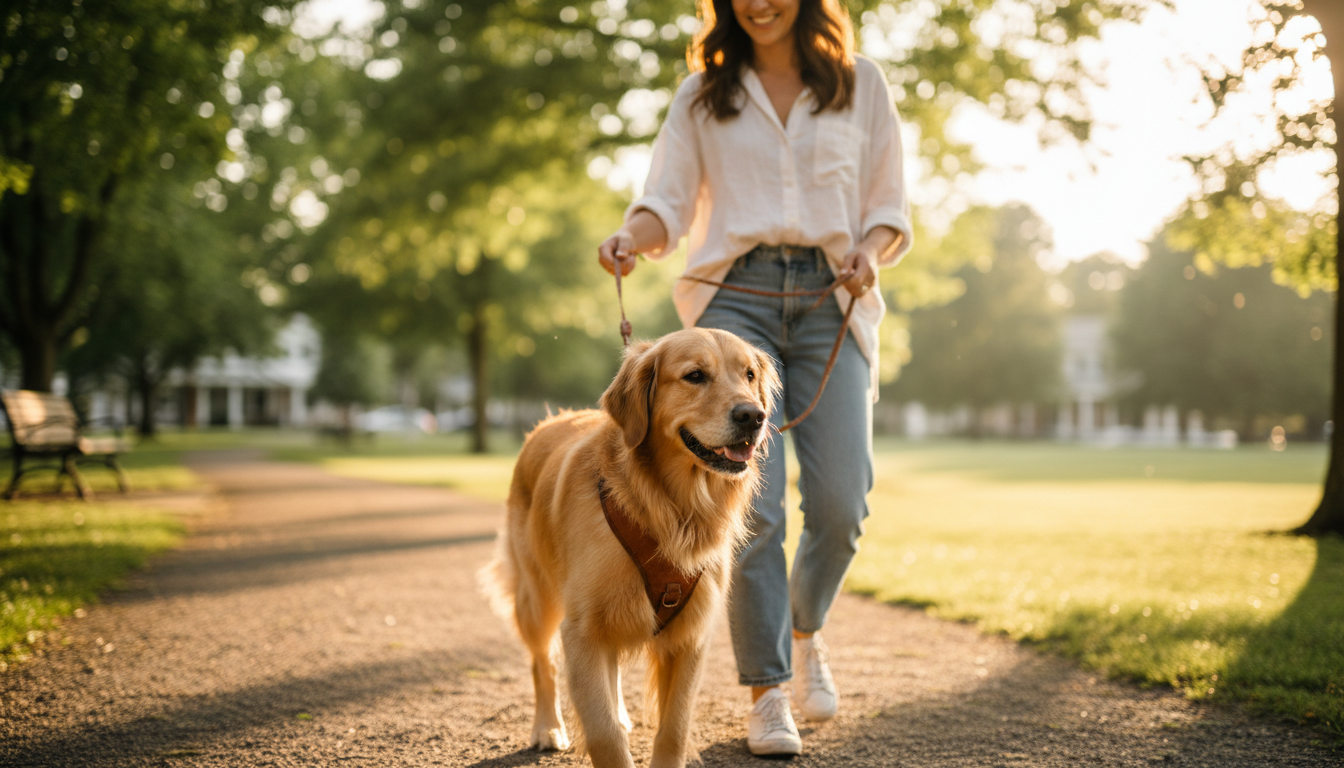

Dealing with a lunging, vocal pet can be an incredibly stressful and embarrassing experience for any owner, but mastering How to Teach Any Dog Not to Bark at Other Dogs and People on a Walk - Dog Training Advice Tips is the definitive way to reclaim your peace of mind. By understanding the root causes of reactivity and implementing science-based training techniques, you can transform chaotic strolls into calm, enjoyable experiences for both you and your canine companion.
In this comprehensive guide, we will dive deep into the mechanics of leash reactivity, the importance of distance thresholds, and the exact step-by-step methods used by professional behaviorists to desensitize your dog to environmental triggers. You will learn how to use positive reinforcement effectively and gain the confidence to handle any situation that arises on your daily route, ensuring you have the ultimate roadmap for How to Teach Any Dog Not to Bark at Other Dogs and People on a Walk - Dog Training Advice Tips.

Why Do Dogs Bark on Walks? Understanding the Triggers
To solve the problem, you must first understand why it is happening. Most owners assume their dog is being "aggressive," but in the world of canine behavior, this is often a misunderstanding. Most vocalizations on a leash fall under the category of Leash Reactivity. This is a behavioral state where a dog overreacts to normal stimuli due to a specific emotional response.
Fear vs. Frustrated Greeting
There are generally two reasons a dog barks at others. The first is fear-based reactivity. When a dog feels vulnerable because they are tethered to a leash and cannot move away from a perceived threat, they use barking and lunging to "make the scary thing go away." The second is "frustrated greeting." These are dogs that actually like other dogs or people but become intensely frustrated by the physical restraint of the leash, leading to a vocal outburst.
The Concept of Thresholds
A critical concept in How to Teach Any Dog Not to Bark at Other Dogs and People on a Walk - Dog Training Advice Tips is the Threshold. Think of the threshold as an invisible bubble around your dog. When a "trigger" (a person or another dog) is outside that bubble, your dog remains calm. Once the trigger enters that bubble, the dog crosses the threshold and enters a state of "red zone" reactivity where they are no longer capable of learning. Effective training always happens below this threshold.
Reading Dog Body Language
Before the first bark even happens, your dog is likely communicating through subtle Body Language. Look for a stiffened tail, a hard stare, pinned ears, or a closed mouth. Learning the nuances of reading dog body language allows you to intervene before the behavior escalates into a full-blown barking episode.

Essential Gear for Reactive Dog Training
You cannot successfully implement How to Teach Any Dog Not to Bark at Other Dogs and People on a Walk - Dog Training Advice Tips without the right tools. Using equipment that causes pain (like prong or choke collars) often backfires by increasing the dog’s anxiety and association of pain with the sight of other dogs.
- High-Value Treats: Ordinary kibble won't work here. You need "the good stuff"—think boiled chicken, string cheese, liver cake, or hot dog slivers. These are essential for Positive Reinforcement.
- Front-Clip Harness: A Front-Clip Harness provides better mechanical leverage. When the dog pulls, the harness gently redirects their body back toward you, making them easier to manage without causing neck strain.
- Standard 6-Foot Leash: Avoid retractable leashes at all costs. They provide inconsistent tension and make it nearly impossible to maintain control in a high-distraction environment.
- Treat Pouch: Speed is key in training. A waist-mounted treat pouch ensures you can deliver a reward the split second your dog makes a good choice.

Step-by-Step Training Guide to Stop the Barking
Training a reactive dog is a marathon, not a sprint. Follow this Step-by-Step Guide to build a solid foundation of focus and calm.
Step 1: The Watch Me Command
Before you face a real-world trigger, you must establish a "focus" cue in a low-distraction environment, like your living room. Say your dog's name or the command "Watch Me." The moment they make eye contact, click or say "Yes!" and deliver a treat. Gradually increase the duration of the eye contact. The goal is to make looking at you more rewarding than looking at anything else in the world.
Step 2: The Look at That (LAT) Game
The "Look at That" game is a cornerstone of How to Teach Any Dog Not to Bark at Other Dogs and People on a Walk - Dog Training Advice Tips.
1. Find a distance where your dog sees a trigger but isn't barking yet (below Threshold).
2. The moment your dog notices the other dog or person, mark it (with a clicker or "Yes!").
3. When they turn to you for their treat, deliver it.
4. Repeat this until the dog sees a trigger and immediately looks at you for a reward. This changes their emotional response from "Stranger = Bark" to "Stranger = Check in with Mom/Dad for a treat."
Step 3: Counter-Conditioning and Desensitization
Counter-Conditioning is the process of changing the dog’s underlying emotional response to a stimulus. If your dog is afraid of people, we want to create a new association: Person = Cheese. Desensitization involves doing this at a very low intensity (at a distance) and slowly moving closer as the dog proves they can remain calm. This is the most effective long-term solution for leash reactivity.
Management Strategies: What to Do When Training Fails
Even the best-trained dogs will have bad days. When you find yourself in a situation where a trigger appears suddenly and your dog is over Threshold, you need management strategies to get out of the situation safely.
The Emergency U-Turn
Practice the "U-Turn" as a fun game during normal walks. Simply say "Let's go!" in a cheerful voice, turn 180 degrees, and jog a few steps in the opposite direction. Reward your dog for following you. In a real-world scenario, this allows you to exit a confrontation before your dog has a chance to react.
Using Environmental Barriers
If you see a trigger approaching and don't have space to move away, use your environment. Duck behind a parked car, step behind a large bush, or move into a driveway. Breaking the line of sight is often enough to lower the dog’s stress levels and prevent a barking fit.
5 Pro Dog Training Advice Tips for Success
Implementing How to Teach Any Dog Not to Bark at Other Dogs and People on a Walk - Dog Training Advice Tipsrequires a strategic mindset. Here are five expert tips to accelerate your progress:
1. Consistency is Key: If you allow your dog to bark at the window at home or "greet" dogs sometimes while barking, you are sending mixed signals. Every walk should be a training session.
2. Exercise Before the Walk: A dog with "zoomies" or excess energy is more likely to be reactive. Engage in a game of fetch or tug in the backyard before hitting the sidewalk to take the edge off.
3. Don’t Scold the Bark: Yelling "No!" or jerking the leash adds more stress to an already stressful situation. Your dog may think you are barking with them, which reinforces the idea that the trigger is indeed something to worry about.
4. Keep the Leash Loose: A tight leash sends a signal of tension down the line to your dog. Try to maintain a "J" shape in your leash; a relaxed leash encourages a relaxed dog.
5. Be Your Dog's Advocate: If a stranger asks to pet your dog or brings their "friendly" dog toward you, it is okay to say "No, we are in training." Protecting your dog’s space is vital for their progress.
Frequently Asked Questions (FAQ)
How long does it take to see results?
Every dog is different. Some show improvement in a few weeks, while others with deep-seated fear may take months. Consistency in applying How to Teach Any Dog Not to Bark at Other Dogs and People on a Walk - Dog Training Advice Tips is the biggest factor in speed of success.
Should I use a muzzle?
If you are worried about your dog’s safety or the safety of others, a basket muzzle is a fantastic tool. It allows the dog to pant, drink water, and take treats while providing you with an extra layer of security and confidence.
Can old dogs learn these techniques?
Absolutely. While socialization is easier in puppies, adult and senior dogs are perfectly capable of learning new associations through Desensitization and Counter-Conditioning.
Conclusion
Mastering How to Teach Any Dog Not to Bark at Other Dogs and People on a Walk - Dog Training Advice Tips is a journey that requires patience, empathy, and the right tools. By focusing on Positive Reinforcement, respecting your dog's Threshold, and staying consistent with the "Look at That" game, you are not just stopping a noise; you are building a deeper bond of trust with your pet.
If you find that your dog’s reactivity is not improving or if they are a danger to themselves or others, do not hesitate to contact a certified professional dog trainer or behaviorist. With the right approach, every walk can become a peaceful opportunity to explore the world together.


