

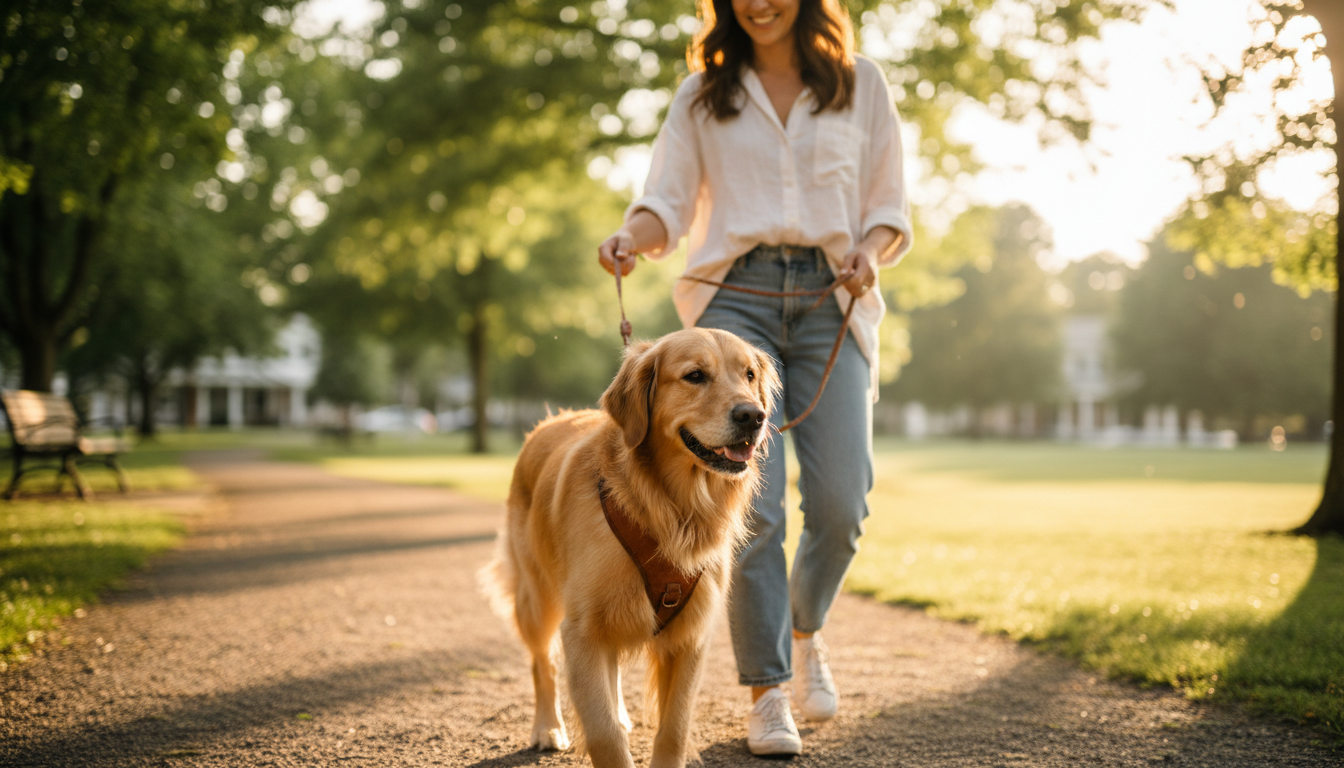
If you've ever typed how long should I walk my dog calculator into a search engine, you already know that a one-size-fits-all answer simply doesn't exist. A high-energy Border Collie puppy has radically different exercise requirements than a senior Basset Hound with arthritis — and getting this wrong in either direction can affect your dog's long-term health. This comprehensive guide, complete with a free interactive dog walk calculator, gives you a veterinary-grounded, personalized daily walk schedule based on your dog's age, breed size, energy level, and health status.
🐾 Quick Takeaway
Most healthy adult dogs need 30 to 90 minutes of physical activity per day. However, exact needs vary significantly based on age, breed group, health condition, and outdoor temperature. Use the interactive dog walking time calculator below to get a custom daily walk schedule tailored to your pet — then read on for the veterinary science behind every recommendation.
Interactive Dog Walk Calculator: Find Your Dog's Ideal Daily Exercise
Answer four quick questions about your dog and this dog walking duration calculator will instantly generate a personalized walk schedule, including total daily minutes, recommended session splits, ideal pace, and an estimated daily mileage range.
🐕 Dog Walk Calculator
Get a personalized walk schedule based on your dog's specific needs in under 30 seconds.
⚕️ This calculator is for informational purposes only and is not a substitute for professional veterinary advice. Always consult your veterinarian before starting a new exercise program, especially for dogs with existing health conditions.
Quick Reference Guide: Average Daily Walking Needs by Breed & Size
The table below is a starting framework — not a prescription. Use it alongside the dog exercise calculator above for a result tailored to your individual dog. Recommendations align with AKC dog exercise guidelines and veterinary exercise physiology research.
| Dog Category | Example Breeds | Recommended Daily Walk Time | Ideal Session Breakdown |
|---|---|---|---|
| High-Energy / Herding | Border Collie, Australian Shepherd, Vizsla, Malinois | 60–120+ minutes | 2–3 vigorous walks or runs + job-like mental tasks |
| Sporting / Working | Labrador Retriever, German Shepherd, Golden Retriever, Weimaraner | 60–90 minutes | 2 brisk walks + play or fetch sessions |
| Medium / Terrier Group | Beagle, Cocker Spaniel, Staffordshire Bull Terrier | 40–60 minutes | 2 walks of 20–30 minutes each |
| Toy / Small Breeds | Chihuahua, Maltese, Pomeranian, Shih Tzu | 20–30 minutes | 2 short, casual walks (10–15 min each) |
| Brachycephalic (Flat-Faced) | French Bulldog, Pug, Boston Terrier, English Bulldog | 20–30 minutes | 2 short walks (avoid heat above 75°F / 24°C) |
| Giant Breeds | Great Dane, Mastiff, Saint Bernard, Newfoundland | 30–45 minutes | 1–2 low-impact, moderate walks (avoid repetitive pounding) |
| Senior Dogs (All Breeds) | Age 7+ (varies by size — large breeds age faster) | 20–45 minutes | 2–3 short, gentle sniffing walks — quality over distance |
Note: These ranges are vetted starting points. Individual dogs may need more or less. Work with your veterinarian to fine-tune a schedule based on your dog's Body Condition Score (BCS), cardiovascular fitness level, and any underlying conditions.
Factors That Determine Your Dog's Ideal Walk Duration
Every figure in this dog walking calculator by weight and energy level is derived from five evidence-based variables that veterinary professionals use to assess canine exercise needs. Understanding them helps you adapt your dog's routine as seasons, age, and health conditions change.
1. Age and Developmental Stage
Puppies — The 5-Minute Rule for Puppy Walking
The most widely used veterinary guideline for puppy exercise is the 5-minute rule: allow five minutes of structured leash walking per month of the puppy's age, up to twice per day. So a 3-month-old puppy should walk no more than 15 minutes per session; a 6-month-old, 30 minutes per session. This 5-minute rule for puppy walking calculator approach exists because puppies' growth plates — the zones of soft cartilage at the ends of the long bones — don't fully mineralise until 12 to 18 months of age depending on breed size. Repetitive, high-impact exercise on hard surfaces before this closure can cause permanent skeletal damage.
Unstructured free play in a garden or safe yard is strongly preferred over structured walks for very young puppies. For a how long to walk a puppy by age calculator quick guide: 2 months = 10 min/session, 3 months = 15 min, 4 months = 20 min, 5 months = 25 min, 6 months = 30 min — all split across two daily sessions.
Adult Dogs — The Peak Exercise Window
Adult dogs (typically 1–7 years) are at peak cardiovascular and musculoskeletal health. This is the window where a dog exercise calculator by breed matters most, because the gap between a Toy Poodle's needs and a Belgian Malinois's needs is enormous. Consistency is the key: the AKC recommends that adult dogs receive daily exercise to maintain cardiovascular health, healthy weight, gastrointestinal motility, and behavioural stability.
Senior Dogs — Quality Over Distance
Most veterinary bodies define senior status as 7+ years of age, though large and giant breeds cross this threshold earlier (often at 5–6 years). Senior dogs are prone to osteoarthritis, hip dysplasia, intervertebral disc disease, and cognitive dysfunction syndrome. For anyone asking how long should I walk my senior dog, the answer shifts from distance to enrichment: shorter walks of 15–20 minutes, repeated 2–3 times daily, on soft surfaces, at a pace the dog sets. Prioritise mental stimulation over cardiovascular intensity.
2. Breed Traits and Working Purpose
Breed-specific exercise requirements are arguably the single biggest factor in exercise requirements for high-energy dog breeds. Dogs were selectively bred for specific jobs over hundreds of years, and their exercise needs reflect those ancestral roles:
- Herding breeds (Border Collie, Australian Shepherd, Belgian Malinois): Bred to work 8–12 hours a day. A 30-minute walk alone will never suffice. These dogs need structured activity with a cognitive element — agility, nose work, herding sports, or advanced obedience.
- Sporting breeds (Labrador Retriever, Golden Retriever, Spaniel varieties): Bred for long days in the field. Thrive with 60–90 minutes of daily activity including fetch, swimming, and trail walking. Well suited to hiking alongside active owners.
- Scenthounds (Beagle, Bloodhound, Basset Hound): Driven by olfactory stimulation. Long, sniff-heavy walks satisfy them more than pure distance. Always walk on a leash — their nose overrides their recall instinct.
- Toy and companion breeds (Chihuahua, Maltese, Pomeranian): Lower physical exercise needs, but not zero. Short daily walks plus indoor play sessions are ideal. Over-walking tiny dogs on pavement can damage their small joints just as under-exercising large breeds damages their cardiovascular fitness.
- Giant breeds (Great Dane, Saint Bernard, Mastiff): Despite their size, giants are not endurance athletes. Their skeleton supports enormous mass, and repetitive high-impact exercise accelerates joint wear. Two moderate 15–20 minute walks on soft surfaces are typically appropriate.
3. Health Conditions and Body Condition Score (BCS)
The Body Condition Score (BCS) is the veterinary equivalent of BMI — a 1–9 scale where 4–5 represents ideal weight. Knowing your dog's BCS is foundational to using any how much exercise does my dog need calculator responsibly:
- Overweight dogs (BCS 6–9): Start at 10–15 minutes per session, increase by 5 minutes weekly. Excess body fat increases core temperature faster, stresses joints, and dramatically raises heatstroke risk. Ask your vet for a graduated exercise program.
- Dogs with joint or mobility issues: Osteoarthritis and hip dysplasia are managed — not cured — by appropriate low-impact movement. Short, frequent walks on grass or dirt (not pavement) maintain joint lubrication and slow muscle atrophy far better than rest alone. Veterinary physiotherapy and hydrotherapy are powerful adjuncts.
- Brachycephalic syndrome: Flat-faced breeds suffer from structural narrowing of the nasal passages, elongated soft palate, and sometimes collapsed nostrils. This severely limits their ability to thermoregulate. Learn more in our detailed guide on caring for flat-faced breeds like the Grey French Bulldog.
Dog Walking Temperature Safety: When Is It Too Hot or Too Cold?
A dog walking calculator that ignores weather is incomplete. Ambient temperature and pavement heat are among the most overlooked hazards in canine exercise, and the AVMA and AKC both list heat-related illness as one of the most preventable emergencies in dogs.
Heat Safety & The 7-Second Pavement Rule
Asphalt and concrete can reach temperatures 40–60°F hotter than the ambient air. A dog's paw pads — while tougher than human skin — can suffer burns in under 60 seconds on superheated pavement.
The 7-Second Test: Press the back of your hand flat against the pavement for seven seconds. If it's uncomfortable or painful to hold it there, it is too hot for your dog's paws. Walk on grass, dirt paths, or shaded sidewalks instead — or consider protective dog booties for essential outings. [AFFILIATE LINK — replace with verified partner URL]
| Air Temperature | Risk Level | Recommendation |
|---|---|---|
| Below 75°F (24°C) | ✅ Safe | Normal walk schedule for all breeds |
| 75°F–85°F (24°C–29°C) | ⚠️ Caution | Shorten walks for brachycephalic, overweight, and senior dogs; carry water |
| 85°F–90°F (29°C–32°C) | 🔴 Danger | Restrict to early morning or post-sunset walks; use the 7-second pavement test |
| Above 90°F (32°C+) | 🚨 Emergency Risk | Avoid outdoor walks; use indoor enrichment activities instead |
Signs of heatstroke in dogs include excessive panting, drooling, red gums, vomiting, staggering, and collapse. If you see any of these during a walk, move your dog to shade immediately, apply cool (not cold) water to their paw pads and groin, and contact an emergency vet.
Cold Weather Dog Walking Safety Guidelines
Cold weather carries its own risks. Hypothermia and frostbite can affect dogs — especially small breeds, seniors, puppies, and short-coated dogs — faster than many owners realise. Below are the veterinary-recommended outdoor temperature thresholds for dog walks:
- Above 45°F (7°C): Safe for almost all breeds with no modifications needed.
- 32°F–45°F (0°C–7°C): Small breeds, short-haired dogs, puppies, and seniors benefit from a dog coat or sweater. Limit walks to 30–40 minutes and watch for shivering.
- 20°F–32°F (-6°C–0°C): Restrict all dogs (especially small and senior) to 15–20 minutes maximum. Apply paw balm or booties to prevent salt-burn and frostbite on toe pads. Consider a quality insulated dog jacket. [AFFILIATE LINK]
- Below 20°F (-6°C): High frostbite and hypothermia risk. Restrict to 5–10 minute bathroom breaks only; replace exercise needs with indoor activities for dogs.
When is it too cold to walk a dog? The answer depends heavily on coat thickness, body fat, acclimatisation, and age. When in doubt for vulnerable dogs, bring them in sooner rather than later.
Physical vs. Mental Stimulation: Why "Sniffari" Walks Change Everything
One of the most important — and frequently overlooked — truths in canine exercise science is this: a physically tired dog is not necessarily a satisfied dog. The number of minutes on a dog walking time calculator tells only half the story. The quality and cognitive engagement of those minutes matters just as much.
A dog's olfactory cortex — the brain region devoted to processing scent — occupies a proportionally enormous area compared to the equivalent human structure. Dogs possess up to 300 million olfactory receptors (humans have roughly 6 million), and they use scent to build a rich mental map of their environment. When you allow your dog to stop, sniff, and "read the newspaper" of their local park, you are activating deep neurological processing that produces genuine mental fatigue.
Research in animal behaviour suggests that 15 minutes of dedicated sniffari walking (where the dog leads and sniffs freely, rather than maintaining heel) can provide mental exhaustion equivalent to 30 or more minutes of brisk physical walking. This makes sniff walks especially valuable for:
- Senior dogs with limited mobility
- Dogs recovering from surgery or injury
- Brachycephalic breeds that can't handle vigorous exercise
- High-drive working breeds that need cognitive alongside physical exercise
- Rainy or very cold days when distance must be shortened
For deeper strategies to satisfy your dog's brain beyond the walk itself, see our guide on mental stimulation for dogs — a must-read for any owner dealing with restlessness, attention-seeking, or destructive behaviour.
Recommended Walking Gear for Every Dog (Vet-Approved Picks)
The right equipment makes walks safer, more comfortable, and more enjoyable for both of you. The tools below represent categories that veterinary professionals and certified dog trainers consistently recommend.
🦮 No-Pull Harness
A front-clip no-pull harness reduces leash pulling without putting pressure on the trachea — critical for brachycephalic dogs and neck-sensitive breeds. View top-rated options → [AFFILIATE LINK]
🧊 Cooling Vest (Summer)
Evaporative cooling vests reduce core temperature by up to 10°F for summer walks — a game-changer for flat-faced breeds, dark-coated dogs, and active adults. Shop cooling vests → [AFFILIATE LINK]
🥾 Dog Boots / Paw Protectors
Protective boots serve double duty — guarding against hot summer pavement and winter salt and ice. Look for a non-slip rubber sole and an adjustable strap. Find paw protectors → [AFFILIATE LINK]
💧 Collapsible Water Bowl
Dehydration during walks accelerates overheating. A lightweight silicone bowl clips onto any leash or bag, making it easy to offer water every 15–20 minutes on warm days. See bestsellers → [AFFILIATE LINK]
📍 GPS Dog Tracker
GPS collars let you track distance walked, calories burned, and your dog's real-time location — perfect for high-drive dogs with strong prey drives that might bolt. Compare GPS trackers → [AFFILIATE LINK]
🦴 Joint Supplement (Senior Dogs)
Glucosamine and omega-3 supplements support cartilage health and reduce inflammation in senior dogs, making their daily walks more comfortable. Always vet-approved before starting. View vet-rated supplements → [AFFILIATE LINK]
Signs Your Dog Isn't Getting the Right Amount of Exercise
Even the best dog walking duration calculator is a guide, not a guarantee. Your dog's behaviour and physical condition are the ultimate real-time feedback loop. Here's what to watch for:
🐕 Signs Your Dog Needs More Exercise (Under-Exercised)
- Destructive chewing — furniture, shoes, baseboards; a classic outlet for pent-up energy
- Excessive barking or whining — particularly attention-seeking or frustration barking (see our guide to stopping excessive barking)
- Indoor restlessness — pacing, inability to settle, zoomies at inappropriate times
- Weight gain — calories in excess of what's burned during low-activity days accumulate quickly
- Poor sleep quality — under-exercised dogs often wake frequently at night
- Jumping on people and leash-pulling — uncontrolled energy on walks suggests insufficient daily output
😓 Signs Your Dog Is Getting Too Much Exercise (Over-Exercised)
- Excessive panting at rest — prolonged heavy breathing after a walk is done indicates over-exertion
- Lagging behind or lying down mid-walk — a dog refusing to continue is communicating genuine fatigue
- Limping or stiffness the day after a long walk — soreness that persists more than a few hours warrants a vet check
- Cracked, red, or bleeding paw pads — pavement abrasion from distance or heat
- Muscle trembling — especially in hind limbs after intense exercise, can indicate muscle fatigue or electrolyte depletion
- Sudden appetite loss — extreme fatigue can temporarily suppress appetite in dogs
How Many Miles Should I Walk My Dog Daily?
Distance is a less reliable measure than time, because pace varies enormously between breeds — a Greyhound's brisk walk covers the same ground in half the time of a Basset Hound's leisurely sniff-patrol. That said, here are approximate daily mileage targets as a supplementary guide to the time-based recommendations in the dog walk calculator above:
- Toy and small breeds: 0.5–1.5 miles per day across 2 sessions
- Medium breeds at moderate energy: 1.5–3 miles per day
- Large sporting and working breeds: 3–6 miles per day (conditioned adults)
- High-energy herding breeds: 5–10+ miles per day when fully conditioned
- Senior dogs of all sizes: 0.5–2 miles per day, dependent on mobility
For how many miles should I walk my dog daily, always build distance gradually — increases of more than 10% per week risk overuse injury, particularly in dogs not yet acclimatised to regular walking. This mirrors the 10% rule used in human running training and is equally applicable to canine exercise physiology.
Frequently Asked Questions
These are the questions most frequently asked alongside searches for a dog walking time calculator. Answers reflect current veterinary consensus.
How long should I walk my dog every day?
Most healthy adult dogs need between 30 and 90 minutes of daily physical activity, split across two or more sessions. The exact figure depends on breed size, energy level, age, and health — which is precisely what the how long should I walk my dog calculator at the top of this page is designed to calculate for your individual dog. Small, low-energy breeds may thrive on 20–30 minutes; high-drive working breeds may need 2 hours or more.
Is a 30-minute walk enough for a dog?
For small breeds (Chihuahua, Shih Tzu, Maltese), senior dogs, and low-energy adult dogs, a 30-minute daily walk is generally sufficient — especially when combined with indoor playtime and mental stimulation activities. However, for working, herding, and high-energy sporting breeds, 30 minutes is typically inadequate and can contribute to destructive behaviour, weight gain, and anxiety. These breeds usually need 60–120+ minutes of daily activity.
How far should a 4-month-old puppy walk?
Using the standard veterinary 5-minute rule, a 4-month-old puppy should walk for approximately 20 minutes per session, no more than twice daily. This means a maximum of 40 minutes of structured walking per day — well short of what many first-time owners assume. Going beyond this risks damaging the puppy's still-developing growth plates, which may not close until 12–18 months depending on breed size.
Can you walk a dog too much?
Yes. Over-exercising is a genuine health risk, particularly in puppies, giant breeds, and dogs with joint or cardiovascular conditions. Signs include lagging behind, excessive panting, limping, stiffness the following day, and cracked paw pads. In growing puppies, repetitive impact exercise before growth plate closure can cause permanent skeletal damage. Even in healthy adults, increasing mileage by more than 10% per week can cause overuse injuries. Always follow your dog's cues — if they slow down or stop, respect that signal.
Is it too hot to walk my dog right now?
Use the 7-second pavement test: press the back of your hand firmly to the pavement for 7 seconds. If it's uncomfortable, it's dangerous for your dog's paws. As a rule, avoid walks on sunny days when air temperature exceeds 85°F (29°C), and always favour grass or shaded paths. Walk in the early morning or after sunset during summer. If in doubt, save the walk for cooler hours and use indoor enrichment activities as a substitute.
When is it too cold to walk a dog?
Below 20°F (-6°C), frostbite and hypothermia risks become significant for most dogs — especially small breeds, puppies, seniors, and short-coated dogs. Between 20°F and 32°F (-6°C to 0°C), limit walks to 15–20 minutes and use a coat and paw balm. Above 32°F (0°C), most healthy dogs can walk normally, though cold-sensitive individuals benefit from insulated outerwear. Always wipe paw pads after winter walks to remove road salt and de-icing chemicals, which are toxic if ingested through licking.
How does a dog walking calculator account for weight and energy level?
A properly designed dog walking calculator by weight and energy level uses a matrix of base exercise values derived from breed size and age, then applies multipliers for energy level (low, moderate, or high drive) and adjustments for health status. Overweight dogs receive a significantly reduced starting target to protect joints and prevent overheating. Brachycephalic dogs are capped at shorter durations regardless of energy level, due to their thermoregulation limitations. The interactive calculator on this page applies exactly this logic to generate your result.
Related Guides on Best Pets Corner
- Mental Stimulation for Dogs: 12 Creative Ways to Perk Up Your Pup — Because walks alone aren't always enough for a truly content dog.
- 25+ Fun Indoor Activities for Dogs: The Boredom Buster Guide — Essential for hot summer days, icy winters, or recovery days when outdoor walks are off the table.
- How to Train a Dog to Stop Barking — Excessive barking is often a symptom of under-exercise. This guide covers the training side of the equation.
- Grey French Bulldog Care Guide — Everything owners of brachycephalic breeds need to know about safe exercise, heat management, and daily care.
- Best Dog Breeds for Hiking and Apartment Living — If you're choosing a breed based on your own activity level, this guide matches you with the right match.
- The Ins and Outs of Service Dogs — How professional trainers think about daily exercise and conditioning for working dogs.
Final Thoughts: Use the Dog Walk Calculator as Your Starting Point
There is no universally "correct" answer to how long your dog should walk each day — and any resource that offers one without asking about age, breed, health, and energy level is oversimplifying. The best tool is the one that accounts for your individual dog's biology and behaviour, which is exactly what this dog walk calculator is designed to do.
Start with the personalised output from the how long should I walk my dog calculator at the top of this page. Track your dog's behaviour over the following 2–3 weeks: are they calmer at home? Are they sleeping better? Is their weight stable? Are they enthusiastic at leash time, or lagging and reluctant? These behavioural cues are the real-world validation that no algorithm can replicate. Adjust, iterate, and when in doubt — bring your vet into the conversation. A brief wellness exam that includes a Body Condition Score assessment and exercise discussion is one of the most valuable investments you can make for your dog's long-term health.
Did this calculator help you? Bookmark this page to revisit as your dog ages or their health status changes — their exercise needs will evolve throughout their life. And if you found it useful, share it with a fellow dog owner who might still be wondering how long should I walk my dog daily. 🐾