

Imagine this: you've just brought home your adorable new puppy, and within the first hour, they've chewed your favorite shoes, had an accident on your carpet, and somehow managed to get tangled in their own leash. Sound familiar? 🐶 Don't panic – this is completely normal! The first week with a new puppy can feel overwhelming, but with the right preparation and mindset, it can also be one of the most rewarding experiences of your life.
Key Takeaways
- Preparation is everything: Set up your home with essential supplies before your puppy arrives
- Establish routines immediately: Consistent feeding, potty, and sleep schedules help your puppy adjust faster
- Safety first: Puppy-proof your home and supervise constantly during the first week
- Patience and positive reinforcement: Focus on building trust and confidence rather than perfect behavior
- Professional support matters: Schedule a vet visit within 48-72 hours and consider puppy training classes
Before Your Puppy Arrives: Essential Preparation
Creating a Puppy-Safe Environment
The most important tips for your first week with your puppy start before they even walk through your door. I learned this the hard way when my first puppy, Max, managed to find every hazard I'd missed during my "puppy-proofing" session.
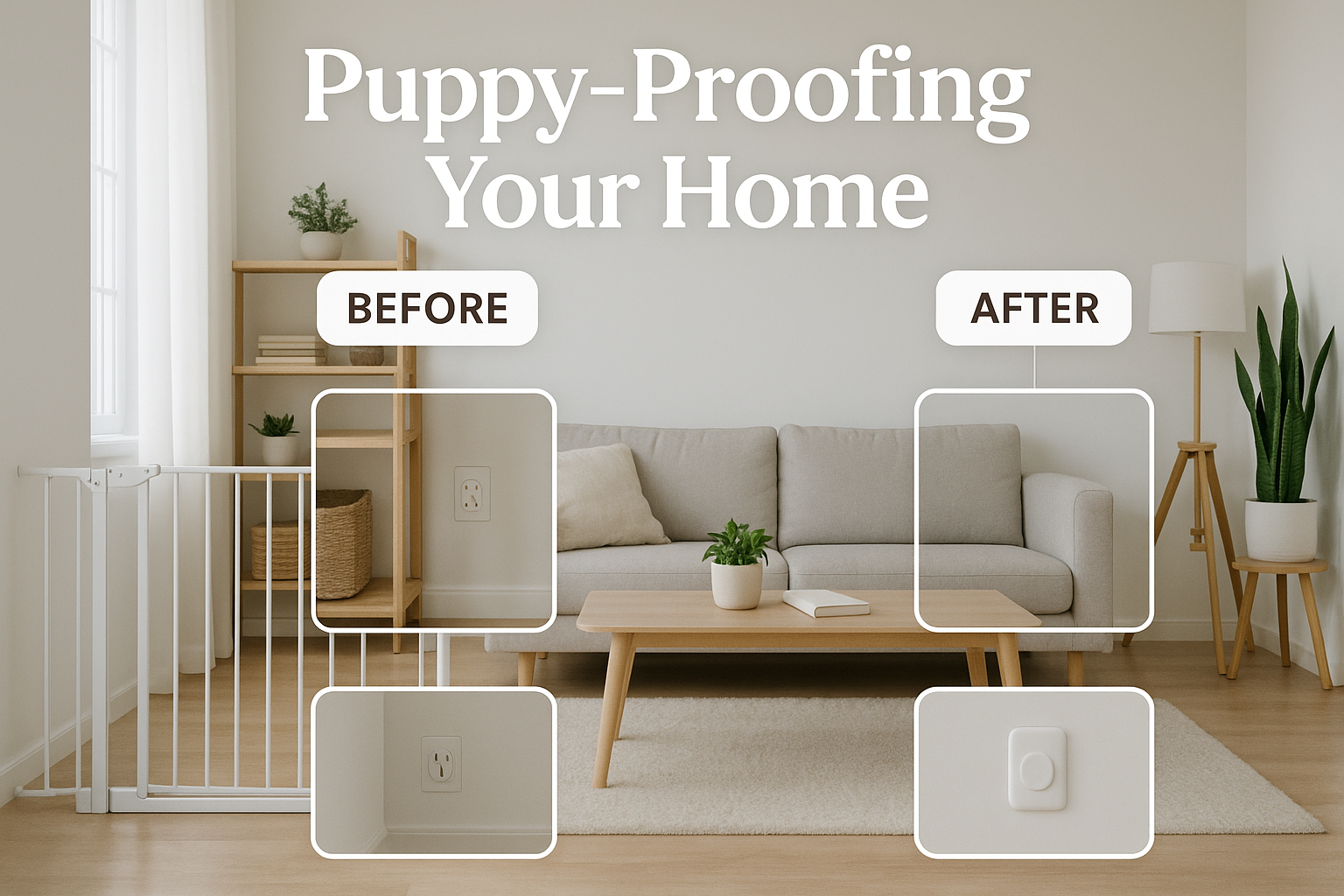
Essential puppy-proofing checklist:
- 🔌 Cover electrical outlets and secure loose cords
- 🧴 Store cleaning supplies, medications, and toxic plants out of reach
- 🗑️ Use trash cans with secure lids
- 👟 Put away shoes, socks, and small objects that could be choking hazards
- 🚪 Install baby gates to restrict access to certain areas
Must-Have Supplies for Your First Week
| Category | Essential Items | Why You Need It |
|---|---|---|
| Feeding | Food bowls, puppy food, treats | Proper nutrition and training rewards |
| Safety | Collar, ID tag, leash, crate | Identification and secure containment |
| Comfort | Bed, blankets, toys | Stress reduction and entertainment |
| Hygiene | Puppy pads, cleaning supplies, grooming tools | Accident cleanup and basic care |
Day 1: The Big Arrival
Making the First Impression Count
Your puppy's first day sets the tone for everything that follows. When I brought home Luna, my Golden Retriever, I made sure to keep things calm and low-key despite my excitement.
Hour-by-hour first day schedule:
First Hour:
- Allow your puppy to explore one room at a time
- Offer water and a small amount of food
- Take them outside for a potty break every 30 minutes
Hours 2-4:
- Introduce the crate with the door open
- Begin using their name positively
- Start establishing where they'll sleep
Evening:
- Stick to a simple routine: eat, potty, play, rest
- Keep interactions gentle and positive
- Prepare for a potentially restless first night
Pro Tip: "The first 24 hours are about decompression, not training. Let your puppy adjust to their new environment before expecting any specific behaviors." - Dr. Sarah Mitchell, Veterinary Behaviorist
Days 2-3: Establishing Routines
The Power of Consistency
Tips for your first week with your puppy heavily emphasize routine because puppies thrive on predictability. By day two, you should start implementing consistent schedules that will become the foundation of your life together.
Sample Daily Schedule for Your New Puppy
6:00 AM - Morning Routine
- ✅ Immediate potty break (carry them outside if not fully vaccinated)
- ✅ Fresh water and breakfast
- ✅ 15-20 minutes of gentle play
8:00 AM - First Nap
- ✅ Crate time or designated quiet area
- ✅ Puppies need 18-20 hours of sleep per day!
10:00 AM - Mid-Morning Activity
- ✅ Potty break
- ✅ Short training session (5-10 minutes)
- ✅ Supervised exploration time
12:00 PM - Lunch and Rest
- ✅ Second meal of the day
- ✅ Potty break
- ✅ Another nap period
3:00 PM - Afternoon Play
- ✅ Interactive play session
- ✅ Potty break
- ✅ Basic socialization (if vaccinated)
6:00 PM - Dinner Time
- ✅ Final meal of the day
- ✅ Potty break
- ✅ Family bonding time
9:00 PM - Wind Down
- ✅ Last potty break
- ✅ Quiet activities
- ✅ Prepare for bedtime
Potty Training Fundamentals
Successful potty training during your first week requires vigilance and consistency. Here's what works:
The 3-Step Potty Training Method:
- Predict: Take your puppy out every 2 hours, plus after eating, drinking, playing, and waking up
- Praise: Celebrate successes with treats and enthusiastic praise
- Prevent: Supervise constantly and interrupt accidents with a gentle "no" before redirecting outside
Days 4-5: Building Confidence and Trust
Socialization Without Overwhelm
Even though your puppy may not be fully vaccinated, you can begin safe socialization practices that are crucial for their development.
Safe early socialization activities:
- 👥 Meeting calm, vaccinated dogs of friends and family
- 🔊 Exposure to household sounds (vacuum, doorbell, TV)
- 🚗 Short car rides in a secure carrier
- 👶 Gentle handling of paws, ears, and mouth
- 🎵 Playing different types of music and sounds
Basic Training Foundations
Essential commands to start practicing:
"Sit" - Hold a treat above their head and slowly move it back. Most puppies naturally sit to follow the treat.
"Come" - Start in a small, enclosed space. Crouch down, open your arms, and use an excited voice.
"Stay" - Begin with just 1-2 seconds, gradually increasing duration.
Name Recognition - Say their name and reward when they look at you.
Remember: Training sessions should be 5-10 minutes maximum. Puppies have short attention spans, and you want to end on a positive note!
Days 6-7: Addressing Common Challenges
Dealing with Puppy Blues
It's completely normal to feel overwhelmed during your first week. I call it "puppy blues," and nearly every new dog owner experiences it. You might feel:
- 😰 Anxious about making mistakes
- 😴 Exhausted from disrupted sleep
- 🤔 Uncertain if you made the right decision
- 😤 Frustrated with accidents and chewing
These feelings are temporary and completely normal!
Common First-Week Problems and Solutions
Problem: Excessive Crying at Night
- Solution: Place the crate near your bed, use a heartbeat toy, and avoid reinforcing crying by letting them out
Problem: Biting and Nipping
- Solution: Redirect to appropriate toys, yelp when bitten (like a littermate would), and never use your hands as toys
Problem: Not Eating
- Solution: Stick to the same food they had before, feed at consistent times, and consult your vet if it continues beyond 24 hours
Problem: Accidents Despite Frequent Potty Breaks
- Solution: Increase frequency of breaks, clean accidents thoroughly with enzymatic cleaner, and never punish
Health and Safety Priorities
Your First Vet Visit
Schedule your puppy's first veterinary appointment within 48-72 hours of bringing them home. This visit should include:
- 🩺 Complete physical examination
- 💉 Discussion of vaccination schedule
- 🪱 Deworming protocol
- 🦠 Parasite prevention plan
- 🍽️ Nutritional guidance
- ❓ Q&A session for all your concerns
Emergency Preparedness
Know the signs that require immediate veterinary attention:
- Vomiting or diarrhea lasting more than 24 hours
- Lethargy or loss of appetite
- Difficulty breathing
- Seizures or loss of consciousness
- Ingestion of toxic substances
Keep your emergency vet clinic's contact information easily accessible, and consider pet insurance during this first week while your puppy is still healthy.
Nutrition and Feeding Guidelines
Choosing the Right Food
For your first week, stick with whatever food your puppy was eating before. Any dietary changes should be gradual over 7-10 days to avoid digestive upset.
Feeding schedule by age:
- 8-12 weeks: 4 meals per day
- 3-6 months: 3 meals per day
- 6+ months: 2 meals per day
Healthy Treat Options for Training
- Small pieces of cooked chicken
- Freeze-dried liver treats
- Commercial puppy training treats (small size)
- Tiny pieces of banana or apple (remove seeds)
Avoid these toxic foods:
- Chocolate, grapes, onions, garlic
- Xylitol (artificial sweetener)
- Macadamia nuts, avocado
- Alcohol, caffeine
Sleep and Crate Training Success
Making the Crate a Happy Place
Tips for your first week with your puppy should always include positive crate training. The crate should never be used as punishment – it's your puppy's safe haven.
Crate training steps:
- Day 1-2: Feed meals in the crate with door open
- Day 3-4: Close door for short periods while you're home
- Day 5-7: Gradually increase duration and try short departures
Managing Sleep Disruptions
Expect interrupted sleep during your first week. Here's how to minimize it:
- Last potty break: Right before bed
- Crate placement: Close enough to hear you, not so close they expect constant attention
- Comfort items: A worn t-shirt with your scent, appropriate chew toy
- Consistency: Same bedtime routine every night
🐶 Puppy First Week Schedule Planner
Track your puppy's daily routine and check off completed activities
💡 Daily Tips
Building Your Support Network
Finding Professional Help
Tips for your first week with your puppy should include identifying professional resources early:
Veterinarian: Beyond health care, many vets offer behavioral guidance
Professional Dog Trainer: Look for positive reinforcement-based trainers
Puppy Socialization Classes: Usually available for puppies 8-16 weeks old
Pet Sitter/Dog Walker: For when you need to be away longer than your puppy can handle
Online Resources and Communities
- Local Facebook groups for dog owners
- Breed-specific forums and communities
- Training apps and video resources
- Emergency vet locator apps
Long-term Success Strategies
Setting Realistic Expectations
Your puppy won't be perfectly trained after one week, and that's completely normal! Here's what you can realistically expect:
By the end of week 1:
- ✅ Basic routine established
- ✅ Some progress on potty training
- ✅ Comfort with crate for short periods
- ✅ Recognition of their name
- ✅ Beginning to understand "sit"
What may still need work:
- ❌ Consistent potty training (can take 4-6 months)
- ❌ Perfect leash walking
- ❌ Reliable recall
- ❌ Impulse control
- ❌ Being alone for extended periods
Planning for Week 2 and Beyond
As you complete your first week, start thinking about:
- Expanding socialization opportunities safely
- Introducing leash training in your yard or home
- Enrolling in puppy kindergarten classes
- Gradually increasing alone time tolerance
- Building on basic commands you've started
Conclusion
Congratulations! You've survived your first week with your new puppy – and that's no small feat! 🎉 Remember, the essential tips for your first week with your puppy are really about building a foundation of trust, routine, and positive experiences that will serve you both for years to come.
The most important thing I've learned from raising multiple puppies is that progress, not perfection, should be your goal. Every puppy is different, and what works for one may not work for another. Trust your instincts, stay consistent with your routines, and don't be afraid to ask for help when you need it.
Your Next Steps:
- Schedule your puppy's second vet visit for continued vaccinations and health monitoring
- Research local puppy training classes to continue socialization and learning
- Evaluate and adjust your routines based on what you've learned about your puppy's personality
- Connect with other dog owners in your community for ongoing support
- Take photos and videos – they grow so fast, and you'll want to remember these precious early days!
The bond you're building now will be the foundation of a beautiful friendship that can last 10-15 years or more. Be patient with yourself and your puppy as you both learn and grow together. You've got this! 🐕💕
SEO Meta Information:
Meta Title: Essential Tips For Your First Week With Your Puppy | 2025 Guide
Meta Description: Complete first week puppy guide with schedules, training tips, and expert advice. Everything new dog owners need for a successful start with their puppy.
Image Prompts
IMAGE_PROMPT_1: Create a 1536x1024 landscape cover image showing an adorable golden retriever puppy sitting in a cozy home setting with puppy supplies around (food bowls, toys, small bed). Overlay the title "Essential Tips For Your First Week With Your Puppy" in large, bold white and navy blue typography on the right side. Use a warm, welcoming background with soft lighting. Ensure all text is perfectly readable and well-positioned within the image boundaries.
IMAGE_PROMPT_2: Create a 1536x1024 landscape infographic showing a daily puppy schedule with colorful timeline graphics. Include icons for feeding (bowl), potty breaks (house), playtime (ball), naps (sleeping puppy), and training (treat). Use a clean, modern design with readable text showing times like "6:00 AM - Morning Potty Break" and "8:00 AM - Breakfast." Ensure all text fits perfectly within the image boundaries.
IMAGE_PROMPT_3: Create a 1024x1024 square image showing essential puppy supplies laid out neatly: collar, leash, food bowls, puppy food bag, toys, crate, bed, and cleaning supplies. Use a clean white background with soft shadows. Include a text overlay reading "First Week Essentials Checklist" in bold, modern typography. Ensure all elements are well-arranged and text is clearly visible.
IMAGE_PROMPT_4: Create a 1536x1024 landscape image showing a puppy-proofed living room with baby gates, covered electrical outlets, and secured items. Include before/after comparison or callout boxes highlighting safety measures. Add text overlay "Puppy-Proofing Your Home" in prominent, readable typography. Use bright, clear lighting and ensure all safety elements are clearly visible.
IMAGE_PROMPT_5: Create a 1024x1024 square image of a cute puppy in a crate with the door open, surrounded by comfort items like a soft blanket and toy. The puppy should look relaxed and happy. Include text overlay "Crate Training Success" in friendly, bold typography. Use warm, cozy lighting to make the crate appear inviting and comfortable.
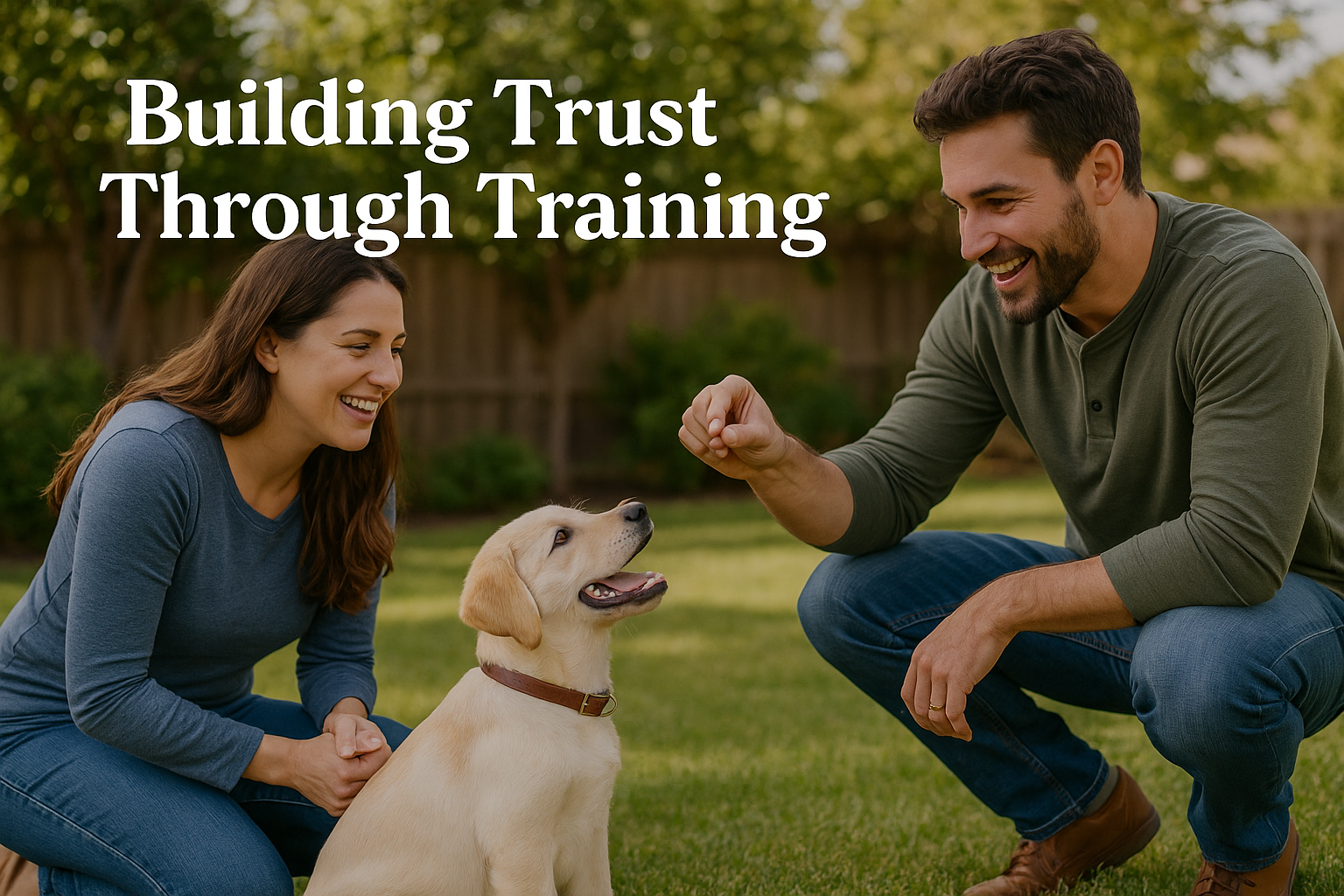
IMAGE_PROMPT_6: Create a 1536x1024 landscape image showing a happy puppy with their new family during a training session, with the puppy sitting and receiving a treat. Include positive body language from both human and puppy. Add text overlay "Building Trust Through Training" in encouraging, bold typography. Use natural lighting and ensure the scene conveys joy and bonding between puppy and owner.